
Side Dishes
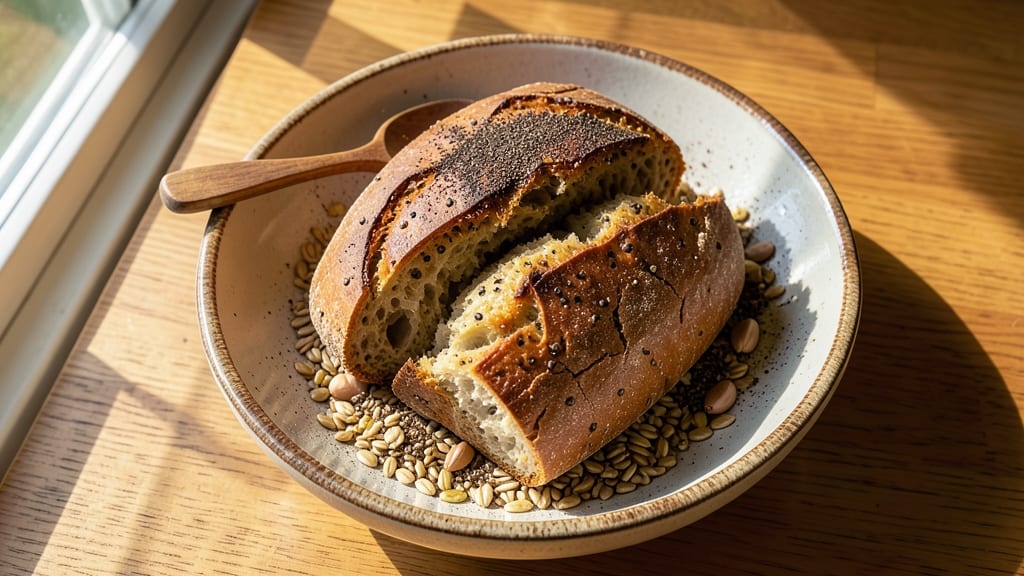
This 7 grain flour bread recipe delivers the perfect harmony of a nutty crust and airy open crumb—something I've perfected after years of experimenting with whole-grain baking.
The secret lies in the blend of seven different flours, each contributing unique texture and flavor while working together to create a loaf that's both hearty and tender. What sets this apart is the fermentation process, which develops deep, complex flavors and ensures that open crumb structure we all love.
The beauty of this recipe is in its simplicity once you understand the key steps: combining flours, activating the yeast properly, and letting the dough ferment slowly for maximum flavor development.
You'll need about 2 hours of active time, but much of that is hands-off, making it perfect for a weekend project. The result is a loaf with a crisp, golden crust that gives way to a soft, open interior with pockets of air—ideal for sandwiches, toast, or serving alongside soups.
What makes this bread truly special is how it transforms ordinary meals into something extraordinary. The nutty undertones from the grains add depth to every bite, while the open crumb ensures each slice feels light and satisfying.
This recipe isn't just about the end product—it's about the process of creating something from scratch that tastes like home. Whether you're a seasoned baker or just starting out, the step-by-step instructions will guide you to success.
The best part? This bread freezes beautifully, so you can bake a loaf and enjoy it all week. For those who love customization, you can easily add seeds or herbs to the dough for extra texture and flavor. Let's get started on creating your perfect loaf of 7-grain bread.
Ingredients for 7 grain flour bread
Seven flours, one magical loaf—here's everything you need for that perfect nutty crust and airy crumb.
| Ingredient | Amount | Notes |
|---|---|---|
| All-Purpose Flour 🌾 | 2 cups | For structure and lightness |
| Whole Wheat Flour 🌾 | 1 cup | Adds hearty texture |
| Spelt Flour 🌾 | ½ cup | Nutty flavor profile |
| Buckwheat Flour 🌾 | ⅓ cup | Earthy depth (sifted) |
| Oat Flour 🌾 | ⅓ cup | Creamy texture |
| Rye Flour 🌾 | ⅓ cup | Rich, malty notes |
| Cornmeal 🌽 | ¼ cup | Crisp crust enhancer |
| Active Dry Yeast 🍞 | 2 ¼ tsp | Freshly tested for viability |
| Granulated Sugar 🍚 | 1 tbsp | Feeds yeast activation |
| Salt 🧂 | 1 ½ tsp | Diamond Crystal preferred |
| Olive Oil 🫒 | ½ cup | Extra-virgin for richness |
| Warm Water 💧 | 1 ¼ cups | 110°F for yeast activation |
| Honey 🍯 | 1 tbsp | Optional for sweetness |
| Sunflower Seeds 🌻 | ¼ cup | Optional for crunch |
| Sesame Seeds 🌱 | 1 tbsp | Optional for topping |
The flours are the heart of this recipe. King Arthur sells pre-mixed whole grain flours, but I love blending my own for that custom touch. For buckwheat and rye, Bob's Red Mill has the best quality—just sift them before mixing to avoid lumps. Spelt flour can be tricky to find, so check the organic section at Whole Foods or order online. The cornmeal? Stone-ground makes all the difference for that crisp crust. Pro tip: Toast your oat flour lightly in a dry pan for 2 minutes to deepen its flavor—trust me, it's worth the extra minute.
No buckwheat flour? Substitute with extra rye at the same amount, but expect a slightly denser crumb. Running low on rye? Whole wheat plus 1 tsp extra molasses mimics that malty depth. For the yeast, always test it first—drop a pinch in warm water with a pinch of sugar; if it bubbles in 5 minutes, it's active. The honey is optional but adds that subtle sweetness that balances the nuttiness. Want to skip it? A splash of maple syrup works too. And if you're adding seeds, toast them first—they'll add way more flavor to your loaf.
This dough is a patient one. Let it ferment at room temperature for 1.5-2 hours before shaping, then refrigerate overnight for maximum flavor development. The longer it ferments, the better it tastes—up to 24 hours is ideal. Once baked, let it cool completely before slicing (or it'll turn gummy). Store wrapped at room temp for 3 days, or freeze for 3 months. I always bake two loaves—one for the week, one to freeze. The seeds? Sprinkle them on top right before baking for that perfect crunch.
Why You'll Love This Recipe
- I’ll be real: the mix of whole grains and all-purpose keeps costs down without sacrificing texture. A single batch lasts my family five days—perfect for meal prep. Plus, the leftovers? Toss them in the toaster and you’ve got free breakfast for the week. Smart, simple, and satisfying.
- No-Fuss Mixing: I swear by this blend—just toss the flours together in a bowl, add water and yeast, and knead until sticky. No fancy equipment, no waiting for dough to chill overnight. My hands get a workout, but the effort pays off with a loaf that’s ready in under an hour.
- Earthy Depth: That buckwheat and spelt? They add a nutty, almost toasty richness you won’t find in basic white bread. Honestly, the first slice out of the oven smells like a bakery—warm, complex, and impossible to resist. The oat flour even gives it a subtle crunch that keeps it interesting.
- Weeknight Wonder: This bread is my go-to for sandwiches, toast, or even croutons. Between us, I’ve used it to soak up soup broth, pair with charcuterie, and yes, even as a side for breakfast eggs. It’s the kind of loaf that makes you wonder why you ever bought store-bought.
Step-by-step instructions for 7 grain flour bread
Transform these seven flours into a loaf with a nutty crust and airy crumb—no fancy equipment needed!
Activate the Yeast and Mix Wet Ingredients
In a small bowl, combine the 1.25 cups warm water (about 110°F), 1 tbsp granulated sugar, and 2.25 tsp active dry yeast. Let it sit for 5-10 minutes until frothy—this confirms the yeast is alive and ready to work. If it doesn’t bubble, your yeast might be dead, and you’ll need to start over.
In a large mixing bowl, whisk together the 0.5 cup olive oil, 1 tbsp honey, and 1.5 tsp salt. The honey adds subtle sweetness while the olive oil keeps the dough tender. This is where the magic begins—don’t skip the salt, as it balances the earthy flavors of the flours.
Combine Dry Ingredients and Form the Dough
Add the 2 cups all-purpose flour, 1 cup whole wheat flour, 0.5 cup spelt flour, 0.33 cup buckwheat flour, 0.33 cup oat flour, 0.33 cup rye flour, and 0.25 cup cornmeal to the wet mixture. Stir with a wooden spoon until a shaggy dough forms—this is normal, and the dough will come together as you work it.
Gradually incorporate the yeast mixture and knead by hand for 8-10 minutes until the dough is smooth and elastic. It should pull away from the sides of the bowl and not stick to your fingers. If it’s too sticky, add 1 tablespoon of all-purpose flour at a time until it’s manageable. The dough should feel slightly tacky but not wet.
First Rise and Shape the Loaf
Lightly grease a large bowl with olive oil, place the dough inside, and cover it with a damp kitchen towel or plastic wrap. Let it rise in a warm place (like the top of your oven with the light on) for 1-2 hours, or until it has roughly doubled in size. You’ll see bubbles forming on the surface—this means the yeast is doing its job!
Once risen, punch down the dough to release air, then shape it into a 9x5-inch loaf pan by pressing it gently into the corners. The dough will be firm but pliable—don’t force it if it resists. Sprinkle 0.25 cup sunflower seeds evenly over the top for texture, then cover loosely with the towel and let it rise for another 30-45 minutes until it’s just above the pan’s rim.
Preheat and Bake for a Crispy Crust
Preheat your oven to 375°F and place a baking sheet on the lower rack. This creates steam, which helps the bread develop that perfect open crumb. Once the oven is hot, bake the loaf for 40-45 minutes until the top is deep golden brown and sounds hollow when tapped on the bottom.
For extra crispiness, brush the top with a little more olive oil after 20 minutes of baking. If the crust starts browning too quickly, tent the loaf with foil to prevent burning. The internal temperature should reach 190-200°F when checked with an instant-read thermometer.
Cool and Enjoy Your Masterpiece
Remove the bread from the oven and let it cool in the pan for 10 minutes, then transfer it to a wire rack. Resist the urge to slice it immediately—the crust will firm up as it cools, and the crumb will set for a cleaner cut. For the best texture, wait at least 30 minutes before slicing.
Sprinkle the top with 1 tbsp sesame seeds while still warm for a final crunch. This bread is best enjoyed fresh, with a rich nutty flavor from the spelt and rye, a crispy crust from the cornmeal, and a soft, airy interior. Slice it thick for sandwiches or toast it for a hearty breakfast—either way, you’ve just baked a loaf worth bragging about!
Pro Tips For Making 7 Grain Flour Bread
- SIFT THE FLOURS FIRST: Mix your dry ingredients in a large bowl, then whisk like you mean it—especially that buckwheat flour. It’s dense and absorbs moisture differently, so breaking up clumps early saves you from gummy dough later. (Yes, even if it looks like overkill.)
- WEIGH THE BUCKWHEAT: Scooping buckwheat flour by volume leads to uneven texture—it’s lighter than it looks. Use a kitchen scale for accuracy, especially if your recipe calls for more than ¼ cup. Trust me, your bread’s crumb will thank you.
- DON’T SKIP THE HYDRATION CHECK: This blend drinks up water like a sponge. If your dough feels sticky but not wet, add a splash more—whole wheat and oat flour need extra moisture to avoid a dense, dry crumb. (Pro move: Spritz your work surface with water to keep it from sticking.)
- BAKE WITH A TRAY OF WATER: Place a shallow pan of boiling water on the lower oven rack while preheating. The steam helps the crust brown evenly and prevents the bread from drying out on the bottom—critical with all those moisture-loving flours. (No steam bath? A damp towel on the oven rack works too.)
Regional styles of this 7 grain flour bread
German Seed Bread
In Germany, this bread is known as Samenbrot, a rustic loaf often studded with seeds like flax, pumpkin, and sesame. The key difference? Replace the sunflower seeds with a mix of 2 tbsp flaxseeds, 2 tbsp pumpkin seeds, and 1 tbsp sesame seeds for authentic texture.
German bakers often add 1 tsp caraway seeds to the dough for a warm, anise-like flavor that pairs perfectly with the nuttiness of the grains. 🌱
Italian Rustic Bread
For an Italian twist, transform this into Pane ai Cereali, a beloved rustic loaf from Tuscany. Swap the seeds for 1 tbsp fennel seeds and 1 tbsp poppy seeds, then shape the dough into a round boule instead of a loaf pan.
Brush the top with olive oil and sprinkle with coarse sea salt before baking. The result is a crispy, golden crust with a soft, open crumb—ideal for dipping in olive oil or pairing with tomato-basil soup.
Swedish Cardamom Bread
In Sweden, Kardemummabullar is a sweet, spiced bread often enjoyed for breakfast. For this variation, reduce the honey to 1 tbsp and add 1 tsp ground cardamom to the dough. Shape the bread into a small round loaf and bake as directed.
Once cooled, brush the top with melted butter and sprinkle with pearl sugar for a festive touch. This version is perfect for cinnamon rolls or French toast—just slice it thick!
American Sourdough Hybrid
For a modern take, blend this 7-grain bread with sourdough starter to create a hybrid loaf with tangy depth. Replace 1 cup of water with 1 cup active sourdough starter (100% hydration) and reduce the yeast to 1 tsp.
Let the dough ferment at room temperature for 4 hours, then cold-proof overnight. The result? A crisp crust with a chewy, open crumb—ideal for sandwiches or grilled cheese. Add 1 tbsp rosemary to the dough for an herbaceous twist. 🌾
Japanese Multi-Grain Bread
In Japan, Beikogashi (multi-grain bread) is a staple in bakeries. For this version, replace the buckwheat flour with white rice flour and add 2 tbsp black sesame seeds for color and nuttiness. Shape the dough into a round loaf and bake as usual.
Once cooled, slice into thick rounds and toast lightly for onigiri-style sandwiches. The subtle sweetness of the rice flour balances the earthy grains beautifully. 🍡
French Fougasse Twist
Turn this bread into a Provençal fougasse by shaping the dough into a large oval and dimpling the top with your fingers. Before baking, brush with garlic-infused olive oil and sprinkle with flaky sea salt and dried herbs like thyme and rosemary.
Bake at 375°F for 30-35 minutes until golden. Serve warm with herb butter or olive tapenade for a taste of the South of France. 🌿
Nutrition facts
Frequently asked questions
Why does my 7-grain bread turn out dense instead of open and airy?
This usually happens when the dough doesn't ferment long enough or the flours absorb too much moisture. For best results, let the dough rise until it's doubled in size (about 1.5-2 hours at room temp), then refrigerate overnight for deeper flavor development. If your dough feels too wet, add 1 tbsp extra flour at a time while kneading—whole grains absorb more moisture than all-purpose flour.
Can I substitute any of the flours if I can't find buckwheat or spelt?
For buckwheat, use extra rye flour (same amount) for earthy depth. Spelt can be replaced with whole wheat flour or barley flour, but expect a slightly denser texture. The key is maintaining the 1:1 ratio of whole grains to all-purpose flour—this keeps the structure balanced. Toast your oat flour lightly before mixing for extra flavor!
How do I store this bread to keep it fresh the longest?
Wrap the cooled loaf tightly in plastic wrap or store in an airtight container at room temperature for up to 3 days. For longer storage, freeze the bread (sliced or whole) for up to 3 months. To revive frozen bread, thaw at room temperature for 1-2 hours or warm in a 200°F oven for 10 minutes. Toasting stale slices also works wonders!
What's the best way to reheat slices for sandwiches?
For crispy toast, spread slices with butter or olive oil and toast in a 375°F oven for 5-7 minutes until golden. For softer sandwich bread, warm in a skillet over medium heat for 30 seconds per side—this reactivates the crust without drying it out. A quick zap in the microwave (10 seconds) works in a pinch, but it won't be as crisp.
Can I make this bread without a loaf pan?
Yes! Shape the dough into a round boule or batard (oval) and bake on a parchment-lined baking sheet. Brush with olive oil and sprinkle with seeds before baking. For extra crispiness, bake at 425°F for 25 minutes with a baking sheet on the lower rack to create steam. The texture will be slightly different but equally delicious—perfect for rustic-style bread!