
Breakfast & Brunch
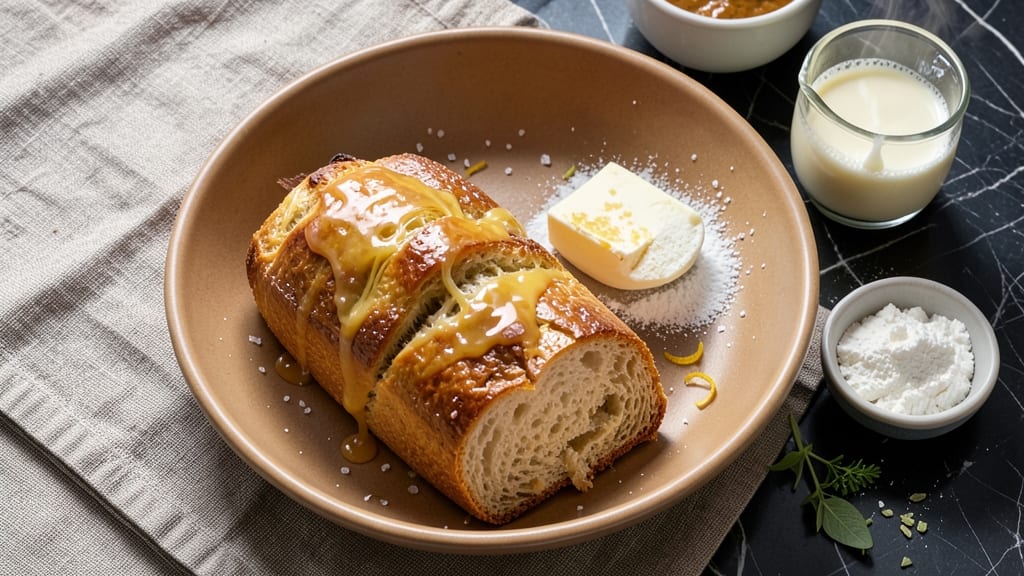
This moist bread recipe transforms ordinary loaves into tender, egg-enhanced perfection by adding an egg to the bread recipe, which delivers unmatched texture and richness. The secret lies in balancing yeast activation with egg proteins that create a lighter crumb and longer shelf life—ideal for sandwiches or toast.
I developed this method after years of baking dense, dry loaves, and the difference is night-and-day.
The eggs play three critical roles: they tenderize the gluten structure, retain moisture during baking, and add subtle richness that makes every slice irresistible. Unlike traditional bread, this version stays soft for days without turning gummy.
The recipe uses standard pantry ingredients—flour, yeast, milk, and eggs—but the technique ensures professional-quality results even for beginners.
By the time your loaf emerges from the oven, you'll have a golden-brown crust with a tender, slightly springy interior that holds up beautifully to slicing. The egg addition creates a fine, even crumb that's perfect for French toast or garlic bread.
This isn't just bread—it's a versatile base that elevates any meal from breakfast to dinner.
For best results, let the dough rise twice and bake at 375°F for 30-35 minutes until golden. The recipe yields two standard loaves, and leftovers reheat perfectly. Whether you're making sandwiches or serving warm with butter, this egg-enhanced loaf delivers restaurant-quality texture at home.
Ingredients for adding egg to bread
Nine essential ingredients transform ordinary bread into a moist, restaurant-quality loaf with perfect crumb structure.
| Ingredient | Amount | Notes |
|---|---|---|
| All-Purpose Flour 🌾 | 4 cups | Sifted for even texture |
| Large Eggs 🥚 | 2 whole | Room temperature for best mixing |
| Active Dry Yeast 🍞 | 2 ¼ tsp | Ensure expiration date is fresh |
| Granulated Sugar 🍚 | 1 tbsp | Enhances yeast activation |
| Unsalted Butter 🧈 | ½ cup | Softened to room temperature |
| Warm Whole Milk 🥛 | 1 cup | 110°F for optimal yeast activation |
| Diamond Crystal Kosher Salt 🧂 | 1 ½ tsp | Adjust to taste for balance |
| Olive Oil 🫒 | 1 tbsp | For dough handling and greasing |
| Cornmeal 🌽 | ¼ cup | For dusting baking sheet |
The yeast and sugar combination is critical for proper dough development. Freshness matters most with yeast—buy from Whole Foods or King Arthur Flour for reliable quality. The eggs should be large and fresh, as they provide both structure and moisture retention. For the milk, warm it to 110°F to activate the yeast without killing it. The butter should be softened to room temperature to incorporate smoothly into the dough. All-purpose flour is ideal, but bread flour can be substituted for a slightly chewier texture.
No fresh yeast? Instant yeast works at half the amount—simply mix it directly with the flour. Short on eggs? Flax eggs (1 tbsp ground flaxseed + 3 tbsp water per egg) maintain moisture but won't provide the same structure. For a dairy-free version, substitute the milk with warm almond milk and use vegan butter. The olive oil can be swapped for melted coconut oil if preferred. If you lack cornmeal, semolina or rice flour work equally well for dusting.
Store the baked loaves in an airtight container at room temperature for up to 3 days to maintain freshness. For longer storage, wrap tightly in plastic and refrigerate for 5-7 days or freeze for up to 3 months. The egg-enhanced dough can be shaped and refrigerated overnight for easier handling. To reheat, wrap slices in a damp paper towel and warm in a 350°F oven for 5-7 minutes for optimal texture.
Why You'll Love This Recipe
- No-Measurement Guesswork: I swear by this one—just eyeball the flour and eggs until the dough feels right. That rich yeasty aroma mixed with the buttery egg coating? It’s the kind of smell that makes me pause mid-step just to breathe it in.
- Golden Egg Magic: The eggs do all the heavy lifting here. They create that irresistible crispy crust while keeping the inside tender—like a cross between a brioche roll and a soft pretzel. Honestly, the first time I bit into one still warm, I nearly dropped the whole loaf.
- Weeknight Wonder: This dough comes together faster than takeout, and it’s forgiving if I forget to proof it overnight. Toss in a handful of raisins or cinnamon sugar for the kids, and it’s breakfast, snack, or dessert—no planning required.
- Budget-Friendly Luxury: Five ingredients, zero specialty stores. That butter and sugar combo makes it taste like a bakery treat, but I’m paying grocery prices. Plus, a single batch stretches to lunches, sandwiches, or French toast for days—no waste, all flavor.
Step-by-step instructions for egg-enhanced artisan bread
Here's how to incorporate eggs for a richer, moister loaf without compromising structure.
Prepare the Yeast Mixture for Optimal Activation
In a small bowl, combine the 1 cup warm whole milk (between 110°F and 115°F) with the 1 tbsp granulated sugar and 2.25 tsp active dry yeast. Let this mixture sit for 5-10 minutes until it becomes frothy and bubbles form on the surface. This indicates the yeast is active and ready to work.
The sugar provides initial food for the yeast, while the warm milk creates the perfect environment for fermentation. If the mixture doesn't bubble within 10 minutes, your yeast may be inactive—replace it with fresh yeast before proceeding. The texture should be lively, not flat or sluggish.
Combine Wet Ingredients with the Eggs
In a large mixing bowl, beat together the 2 whole large eggs with the 0.5 cup softened unsalted butter and 1 tbsp olive oil until fully emulsified and smooth. This creates a stable fat base that will later incorporate with the flour. The eggs add moisture and structure, while the butter contributes richness and tenderness.
Gradually add the yeast-milk mixture to the egg-butter combination, whisking continuously until fully incorporated. The resulting mixture should be creamy and homogeneous. This step is critical—the eggs prevent the dough from becoming too dry while adding protein for elasticity. If the mixture looks curdled, continue whisking until smooth.
Gradually Incorporate the Flour and Salt
With the mixer on low speed, gradually add the 4 cups all-purpose flour and 1.5 tsp diamond crystal kosher salt to the wet ingredients. Mix just until the dough begins to come together—about 2-3 minutes—before it forms a shaggy mass. Overmixing at this stage develops gluten too early, which can make the final bread dense.
Once the dough pulls away from the sides of the bowl, switch to a dough hook attachment and knead on medium speed for 5-7 minutes until smooth and elastic. The dough should be slightly tacky but not sticky. If it's too wet, add 1-2 tablespoons more flour; if too dry, add 1 teaspoon of warm milk. The eggs help create a softer dough that's easier to handle than traditional bread dough.
First Rise and Shaping for Even Texture
Lightly oil a large mixing bowl, place the dough inside, and cover with a damp towel. Let it rise in a warm place (75°F-80°F) for 1-1.5 hours, or until it has doubled in size. The eggs contribute to a slower, more controlled rise, resulting in better oven spring. Poke the dough gently—it should spring back slowly rather than immediately.
Once risen, turn the dough onto a lightly floured surface and gently deflate it by pressing down with your fingers. Shape into a round loaf or your preferred form, tucking the edges under for a smooth surface. The eggs' additional protein makes the dough more pliable, reducing the risk of tearing during shaping. Place the shaped loaf on a baking sheet dusted with 0.25 cup cornmeal to prevent sticking.
Final Proof and Baking for Moist Crumb
Cover the shaped loaf and let it proof for an additional 30-45 minutes until it has risen noticeably but not doubled in size. The eggs help maintain moisture during this stage, preventing a dry crust. Preheat your oven to 375°F with a Dutch oven inside for 30 minutes to create steam.
Carefully transfer the loaf to the hot Dutch oven and bake for 30 minutes. Remove the lid and continue baking for 10-15 minutes until the crust is golden brown and the internal temperature reaches 190°F. The eggs contribute to a softer crumb that stays moist longer than traditional bread. Let the loaf cool on a wire rack for at least 1 hour before slicing to allow the gluten to relax and the moisture to distribute evenly.
Pro Tips For Making Adding Egg To Bread
- WHISK EGGS COLD: Grab those eggs straight from the fridge and whisk them with the butter and sugar first—before mixing with the flour. Warm eggs lose their structure and make the dough gummy. Trust me, your bread’s texture will thank you later.
- WEIGH THE FLOUR: Ditch the scooping and use a kitchen scale for the flour. A packed cup of all-purpose flour can vary by 20-30 grams, and that throws off the dough’s balance. I learned this the hard way when my bread turned dense instead of light.
- LET YEAST BLOOM: Mix the yeast with warm water and sugar, then wait 5 minutes until it’s frothy before adding to the dough. Cold water kills it, and skipping this step means your bread will rise slower—or not at all. (Yes, even if you’re impatient like me.)
- KNEAD JUST ENOUGH: Stop kneading when the dough springs back slowly after pressing it. Overworking it develops too much gluten, making the bread tough. Aim for 8-10 minutes by hand or 5-6 minutes in a stand mixer. Less is more here.
Make-ahead tips for adding egg to bread
Dough Prep Ahead
Shape your egg-enhanced dough into a loaf and refrigerate it overnight for 8-12 hours before baking. The cold slows fermentation, intensifying flavors and improving texture. I wrap mine in plastic wrap and place it in an airtight container.
This method also makes morning baking effortless—just pull it from the fridge, proof at room temperature for 1 hour, and bake as directed. 📅
Freezer-Friendly Dough
For long-term storage, shape the dough into loaves and freeze them on a floured baking sheet for 1 hour until solid. Transfer to a freezer bag with parchment between layers to prevent sticking.
Thaw overnight in the fridge, then proof and bake as usual. The eggs help preserve moisture during freezing, preventing dryness. I’ve successfully stored dough for 3 months this way. ❄️
Baked Loaf Storage
Wrap cooled loaves tightly in plastic wrap or aluminum foil and store at room temperature for 3-4 days to maintain freshness. The eggs’ fat content extends shelf life compared to traditional bread. For longer storage, freeze sliced bread in a quart freezer bag for up to 3 months.
To reheat, wrap slices in a damp paper towel and warm in a 350°F oven for 5-7 minutes for perfect toastiness. 💡
Portioning for Sandwiches
Slice the loaf into ½-inch thick pieces and store in an airtight container between layers of parchment paper. The egg-enhanced structure holds up better to slicing than standard bread, making it ideal for sandwich prep.
I keep pre-sliced loaves in the fridge for 5 days without drying out. Toast directly from the fridge for crispy edges and warm centers. 🥪
Egg-Based Variations
Add 1 tbsp honey or 1 tsp vanilla extract to the dough for a sweet egg bread perfect for French toast. For savory versions, mix in 1 tsp garlic powder or ½ tsp onion powder before shaping.
The eggs’ richness complements both sweet and savory flavors, making this dough incredibly versatile. 🌟
Nutrition facts
Frequently asked questions
Why does adding egg make bread moister?
The eggs add fat and protein that bind moisture during baking. The yolk's fat content prevents the bread from drying out, while the protein in whites creates a softer crumb structure. This is why egg bread stays fresh longer than traditional loaves.
Can I substitute eggs in this recipe?
For binding, use 2 tbsp ground flaxseed + 6 tbsp water per egg (let sit 5 minutes to thicken). For moisture, try ¼ cup unsweetened applesauce, but texture will differ. Eggs provide both structure and richness that substitutes can't fully replicate.
Will egg bread rise differently than regular bread?
Yes! The eggs slow fermentation slightly, creating a more controlled rise. Your dough will take 10-15% longer to double in size during proofing. The final loaf will be taller with a finer crumb, but the structure remains stable. Monitor closely after 1 hour of rising.
How do I prevent a dense loaf when adding eggs?
Don't overmix after adding flour—just until combined. The eggs increase dough stickiness, so handle gently when shaping. Also, ensure your yeast is active (5-10 minutes of bubbling) and your oven is properly preheated with the Dutch oven inside.
Can I make this bread without a Dutch oven?
Yes! Use a baking sheet lined with parchment and spray with water before baking. Add an ice cube to the pan when it goes in the oven to create steam. The egg-enhanced dough benefits from steam for 20 minutes of baking, then bake uncovered until golden.