
Side Dishes
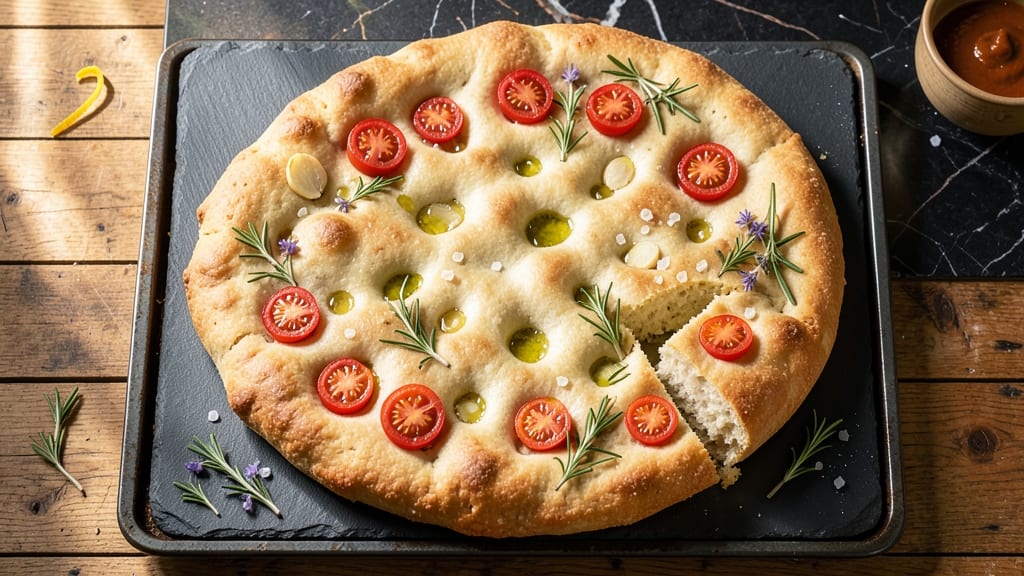
This airy focaccia bread recipe delivers restaurant-quality results with crispy bubbles and an olive oil pool that makes every bite irresistible. The secret lies in proper hydration and technique—no fancy equipment needed, just time and patience.
I developed this version after years of trial and error, focusing on achieving that signature airy texture and golden crust.
What sets this focaccia apart is the combination of high-quality olive oil, active dry yeast, and a long fermentation process. The dough rests overnight, allowing flavors to develop fully while creating those coveted air pockets.
When baked, the olive oil pools beautifully in the center, creating a rich, flavorful base for every slice.
By the time it emerges from the oven, you'll have perfectly golden focaccia with crispy bubbles on top and a tender, airy interior. The aroma alone will have everyone gathering around your kitchen. This bread is impressive enough for dinner parties but simple enough for a weeknight treat.
Use it for sandwiches, dipping in soups, or serving alongside antipasti. The recipe includes optional toppings like rosemary and sea salt for extra flavor. Let's get started on creating your perfect focaccia.
Ingredients for airy focaccia bread
Pantry staples plus a few quality ingredients make this focaccia shine.
| Ingredient | Amount | Notes |
|---|---|---|
| Active Dry Yeast 🍞 | 0.03 oz | 1 packet or 2.5g |
| All-Purpose Flour 🌾 | 3 ½ cups | High-protein preferred (12-14%) |
| Extra-Virgin Olive Oil 🫒 | 1 cup | High-quality, fruity |
| Granulated Sugar 🍚 | ¼ cup | For yeast activation |
| Warm Water 💧 | 1 ¼ cups | 105-110°F for yeast |
| Large Eggs 🥚 | 2 whole | Room temperature |
| Diamond Crystal Kosher Salt 🧂 | 1 ½ tsp | Adjust to taste |
| Fresh Rosemary 🌿 | ¼ cup | Finely chopped, optional |
| Flaky Sea Salt 🧂 | ¼ cup | For topping, optional |
The yeast is non-negotiable—Saf-Instant or Red Star are my go-tos, but any active dry works. Flour matters too: King Arthur or Caputo Tipo 00 give that signature airy texture, but King Arthur all-purpose gets you close. For olive oil, California Gold or Bertolli make the difference. I always grab extra—half goes in the dough, half pools on top. Rosemary? Trader Joe's has the best fresh stems for this.
No yeast? Sourdough starter at double the amount works, but timing changes. Swapping flour? Bread flour at 3 cups works too—just reduce water slightly. Eggs not an option? Flax eggs (2 tbsp ground flax + 6 tbsp water) keep it vegan. For the olive oil pool, use high smoke-point oil like avocado if you're nervous about burning. And yes, you can skip rosemary—just add more salt.
Mix the dough, let it rise overnight in the fridge. That's the secret. The longer it rests, the better it gets. Store wrapped at room temp for 2 days, or freeze for 3 months. Reheat slices in a 350°F oven for 5 minutes to restore crispiness. The olive oil pool? Best eaten fresh—it soaks into the bread too fast to store well.
Why You'll Love This Recipe
- No-Knead Magic: I swear by the simplicity—just mix the yeast, flour, and warm water, then let it rise while I make dinner. The olive oil drizzle at the end? That’s where the real magic happens, and it takes less than 10 minutes of hands-on work.
- Olive Oil Bliss: That first tear of extra-virgin olive oil into the dough? Chef’s kiss. It’s rich, buttery, and fragrant without tasting heavy, and the golden crust? Crispy enough to hold up to dipping but soft enough to tear with your fingers.
- Breakfast to Brunch: This isn’t just dinner bread—it’s my go-to for toast in the morning (slathered with jam or honey) or a quick charcuterie board for guests. The leftovers stay fresh for days, and I’ve even used it to soak up pasta sauce like a dream.
- Budget Stretch: A little yeast and flour go a long way, and olive oil is my pantry’s workhorse. I make two loaves for the price of one store-bought, and they’re done before my grocery delivery even arrives. Plus, the dough’s forgiving—no need for fancy tools.
Step-by-step instructions for airy focaccia bread
Here's how to create that signature olive oil pool with crispy bubbles—it's easier than you think.
Activate the Yeast for Maximum Rise
In a small bowl, combine the 0.03 oz active dry yeast, 0.25 cup granulated sugar, and 1.25 cups warm water (between 105-110°F). Let it sit for 5-10 minutes until frothy—this tells you the yeast is alive and ready to work. If it doesn't bubble after 10 minutes, your yeast might be dead, and you'll need to start over.
I always use a thermometer to check the water temperature because too-hot water kills yeast, while too-cool water won't activate it. The sugar gives the yeast a quick energy boost to get things started. Once it's bubbly, we're ready to build our dough.
Mix and Knead the Dough
In a large mixing bowl, combine the 3.5 cups all-purpose flour and 1.5 tsp diamond crystal kosher salt. Make a well in the center and pour in the activated yeast mixture along with the 2 whole large eggs and 1 cup extra-virgin olive oil. Using a wooden spoon, stir until a shaggy dough forms.
Transfer the dough to a lightly floured surface and knead for 8-10 minutes until smooth and elastic. I press down gently on the dough during the first minute—this prevents it from curling and ensures even contact with the surface. The dough should be soft but not sticky; if it sticks too much, add flour 1 tablespoon at a time until it comes together cleanly.
First Rise for Light and Airy Texture
Place the dough in a lightly oiled bowl, cover it with a clean kitchen towel, and let it rise in a warm place for 1-2 hours, or until it has roughly doubled in size. The kitchen should be warm—if it's chilly, place the bowl near a warm oven or under a light bulb to encourage rising.
I like to give the dough a gentle shake every 30 minutes during this time to help it rise evenly. When the dough has puffed up nicely and springs back slowly when pressed, it's ready for shaping. If it rises too quickly, it might collapse when you shape it—patience is key here.
Shape and Second Rise in the Pan
Generously oil a 9x13-inch baking pan with extra-virgin olive oil, then transfer the risen dough to the pan. Using oiled hands, gently press and stretch the dough to fit the pan evenly. I like to dimple the top with my fingers to create those signature pockets for the olive oil to pool in.
Cover the pan with the kitchen towel again and let it rise for another 30-45 minutes until it's puffy and nearly fills the pan. The edges should be slightly rounded, and the dough should feel springy when touched. This second rise is crucial for that airy texture we're after—don't skip it!
Bake with Olive Oil Pool and Crispy Bubbles
Preheat your oven to 425°F with a baking sheet on the lower rack to create steam. Once preheated, drizzle the dough with more olive oil (about 2-3 tablespoons) and sprinkle evenly with the 0.25 cup flaky sea salt. If using, scatter the 0.25 cup finely chopped fresh rosemary over the top.
Bake for 25-30 minutes until the focaccia is golden brown and the top is covered in crispy bubbles. The edges should be slightly darker, and you'll smell that wonderful toasted bread aroma. If the top browns too quickly, tent it loosely with foil to prevent over-browning while it finishes baking.
Rest and Serve Warm
Remove the focaccia from the oven and let it cool in the pan for 5 minutes. Then transfer it to a wire rack to cool completely. I know it's tempting to dig in right away, but letting it cool for at least 10 minutes helps the texture set properly.
Slice it warm for the best experience—each piece should have that perfect balance of crispy bubbles on top, a soft and airy interior, and that irresistible olive oil pool in the center. Serve it with your favorite dips or use it to make delicious sandwiches. The flavor only gets better as it cools, so enjoy it fresh from the oven!
Pro Tips For Making Airy Focaccia Bread
- LET THE YEAST BLOOM: Mix your yeast with warm water and sugar first, then let it sit for 5 minutes until it’s bubbly and frothy—this proves it’s alive and ready to work. I learned this the hard way when a sluggish yeast turned my focaccia into a dense brick.
- USE THE RIGHT OIL: Extra-virgin olive oil isn’t just for drizzling—it’s the star. Use at least ½ cup for the dough (more if you’re generous) and another 2-3 tablespoons for the final dimpling. Cheap oil won’t give that rich, aromatic flavor or the same tender crumb.
- DON’T SKIP THE FIRST RISE: After mixing, let the dough rise in a warm spot for 1-2 hours until it’s puffy and nearly doubled. Rushing to shape it too soon means less air pockets and a heavier loaf—your future self will notice the difference.
- PRESS HARD TO RELEASE AIR: When shaping the focaccia, press the dough down firmly with your fingertips to create those signature dimples. The more you press, the more air escapes, and the more oil pools in those pockets—leading to a crispy, golden crust. (Yes, it’s messy, but it’s worth it.)
Perfect pairings for airy focaccia bread
Olive Oil Dips
Focaccia's star ingredient—olive oil—shines in dips that complement its airy texture. I love serving it with garlic-infused olive oil (simmer ½ cup olive oil with 3 minced garlic cloves and ½ tsp red pepper flakes for 2 minutes, then strain).
This enhances the bread's flavors while adding a zesty kick. For a tangy twist, mix ¼ cup olive oil with 2 tbsp balsamic vinegar and 1 tsp honey—drizzle on warm slices for a sweet-savory balance. 🫒
Antipasto Platter
Turn your focaccia into the star of an Italian antipasto spread. Pair it with marinated artichoke hearts, prosciutto di Parma, and cherry tomatoes drizzled with balsamic glaze. The crispy bubbles soak up flavors perfectly, while the olive oil pool adds richness.
I always include whipped ricotta with a sprinkle of freshly cracked black pepper—it’s a crowd-pleaser that balances the bread’s heartiness. 🍅
Breakfast Pairings
Warm focaccia makes a fantastic breakfast centerpiece. Top slices with crumbled feta, sliced figs, and a drizzle of honey for a sweet-savory combo.
For a savory option, spread with herb cream cheese (mix 4 oz cream cheese with 1 tbsp chopped chives and ½ tsp lemon zest) and add smoked salmon. The airy texture holds up to toppings beautifully, while the olive oil adds a luxurious touch. 🥓
Wine and Beer
For wine lovers, a crisp Pinot Grigio from Italy cuts through the richness of the olive oil, while a bold Chianti complements the rosemary and salt. I often reach for Peroni or Birra del Borgo for beer pairings—their light, citrusy notes refresh the palate.
Avoid heavy stouts or malty ales, as they can overpower the delicate flavors. A chilled Prosecco also works beautifully for a celebratory touch. 🍷
Sweet Toppings
Don’t limit focaccia to savory pairings! Drizzle warm slices with warm honey and sprinkle with crushed pistachios for a dessert-like treat. For a decadent option, spread with mascarpone cream and top with fresh berries.
The airy texture makes it perfect for holding toppings without becoming soggy. I’ve even used it as a base for mini tiramisu cups—layer with coffee-soaked ladyfingers and mascarpone. 🍯
Nutrition facts
Frequently asked questions about airy focaccia bread
Why does my focaccia turn out dense instead of airy?
Dense focaccia usually means one of two things: underproofed dough or insufficient hydration. Make sure your dough doubles in size during both rises (1-2 hours first rise, 30-45 minutes second rise). Also, check your flour-to-water ratio—this recipe needs 60-65% hydration (about 2 cups water for 3.5 cups flour). Too little water = dense bread.
Can I make this focaccia without a stand mixer?
This recipe only requires 8-10 minutes of hand-kneading on a lightly floured surface. Press down gently on the dough during the first minute to prevent curling, then knead until smooth and elastic. The dough should be soft but not sticky—add flour 1 tablespoon at a time if needed. Patience is key here!
How do I get those perfect crispy bubbles on top?
Crispy bubbles come from proper dimpling and baking technique. After shaping, use your fingers to press dimples into the dough (about 1-inch apart) to create pockets. When baking, place a baking sheet on the lower oven rack to create steam—this helps the bubbles puff up beautifully. Bake at 425°F for 25-30 minutes until golden brown.
Can I make focaccia ahead of time?
Yes! The dough can be refrigerated overnight for even better flavor development. For storage, wrap cooled focaccia tightly in plastic wrap or foil and keep at room temperature for 2 days. To revive, reheat slices in a 350°F oven for 5 minutes until crispy again. For longer storage, freeze for up to 3 months—thaw overnight in the fridge before reheating.
What's the best way to use up leftover focaccia?
Get creative! Toast slices and use as a base for open-faced sandwiches with prosciutto and arugula. Crumble into salads or soups for extra texture. For a sweet twist, make focaccia croutons by cubing and baking with olive oil and herbs. Or simply freeze slices for 3 months to use as toast later. The possibilities are endless!