
Side Dishes
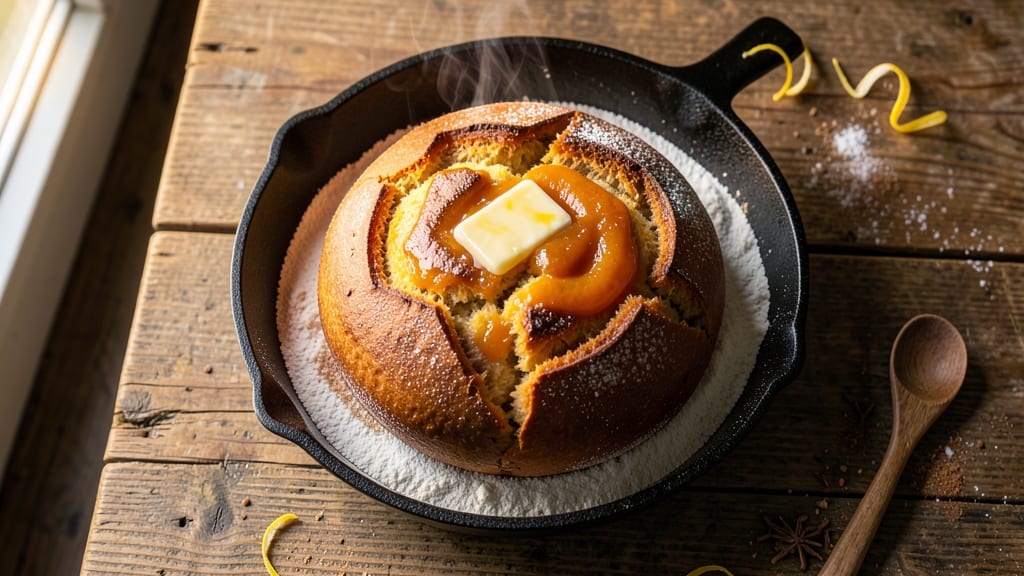
This American persimmon bread recipe transforms seasonal fruit into a moist, fragrant loaf with swirls of sweet-tart persimmon throughout. Perfect for fall harvests, it balances rich buttery crust with the natural sweetness of ripe American persimmons—no artificial flavors needed.
The key lies in proper fruit preparation and precise baking to achieve that signature tender crumb and caramelized top.
The recipe begins with a simple yeast dough enriched with butter and brown sugar, creating a flavor foundation that complements the persimmon's unique taste.
After letting the dough rise, you'll fold in persimmon puree (or finely chopped fruit) in a classic swirl pattern before baking at 350°F for 30-35 minutes. This method ensures even baking and maximum flavor infusion, resulting in a loaf that's perfect for breakfast toast or dessert.
What sets this persimmon bread apart is its ability to showcase the fruit's natural sweetness without overpowering the bread's buttery aroma. The persimmons soften slightly during baking, creating pockets of jammy goodness that contrast beautifully with the tender crumb.
For best results, use ripe persimmons—just firm enough to hold their shape but yielding slightly when pressed.
Serve warm with a pat of butter or a drizzle of honey to enhance the persimmon's natural sweetness. This bread also freezes beautifully, making it an ideal make-ahead option for holiday gatherings or busy mornings.
The recipe yields one 9x5-inch loaf, though it can easily be scaled up for larger crowds.
Ingredients for american persimmon bread
Sweet-tart persimmons meet buttery dough in this fall favorite—just 14 ingredients for homemade magic.
| Ingredient | Amount | Notes |
|---|---|---|
| All-Purpose Flour 🌾 | 4 cups | Sifted for light texture |
| Granulated Sugar 🍚 | ½ cup | White or light brown |
| Packed Brown Sugar 🍚 | ½ cup | For deep caramel flavor |
| Active Dry Yeast 🍞 | 2 ¼ tsp | One packet, room temp |
| Unsalted Butter 🧈 | ½ cup | Cold, cubed for dough |
| Milk 🥛 | ½ cup | Warm, 110°F |
| Large Egg 🥚 | 1 whole | Room temperature |
| Salt 🧂 | 1 tsp | Diamond Crystal preferred |
| Vanilla Extract 🍯 | 1 tsp | Pure, high-quality |
| Ripe American Persimmons 🍈 | 1 ½ cups | Peeled, pureed or chopped |
| Ground Cinnamon 🌿 | 1 tsp | For subtle warmth |
| Granulated Sugar (for topping) 🍚 | ¼ cup | Coarse for texture |
| Coarse Sugar (for topping) 🍚 | ¼ cup | Turbinado or raw sugar |
| Unsalted Butter (for topping) 🧈 | 2 tbsp | Melted for brushing |
Persimmons are the star here—American varieties like Fuyu or Hachiya work best when ripe enough to yield slightly when pressed. Local farmers markets often have them in fall, or check the produce section near apples. For puree, peel and blend with a splash of water until smooth; for texture, finely chop. The dough needs warm milk and butter—microwave the milk for 30 seconds to hit 110°F, then let butter soften to room temp. King Arthur flour or Bread Sifter's Choice gives the best rise for this recipe.
No ripe persimmons? Substitute 1 cup of apple butter for the puree, but reduce the sugar by 1 tbsp to balance sweetness. Short on brown sugar? Swap for white sugar plus 1/2 tsp molasses. The cinnamon is optional but adds warmth—Penzeys brand has the best quality. For a gluten-free version, use a 1:1 GF flour blend like Bob's Red Mill, but expect a denser crumb. The dough should be soft but not sticky; if too wet, add 1 tbsp more flour.
Shape the dough into a loaf pan immediately after the second rise—don't let it sit. For extra shine, brush the top with melted butter after baking. This bread keeps 3 days at room temp wrapped in a towel, or 1 week in the fridge. Freeze for up to 3 months by wrapping tightly in plastic and foil. Reheat slices in a 300°F oven for 5-10 minutes to restore freshness.
Why You'll Love This Recipe
- No Yeast Struggle: I swear by this dough—just mix, let it rise once, and bake. No kneading, no waiting hours, just a single rise while you sip coffee. That butter and brown sugar combo keeps it tender without fuss.
- Sweet Spice Magic: The persimmon’s natural caramel notes pair perfectly with the molassesy brown sugar and warm cinnamon. It’s got that homestyle richness but with a subtle depth that makes it feel special—no one will guess it’s this easy.
- Breakfast to Brunch: Slice it toasted with butter for a quick breakfast, or serve warm with jam for a weekend brunch. The yeast gives it just enough chew to hold up all day, and it freezes beautifully for lazy mornings.
- Budget-Friendly Staples: Flour, sugar, butter—these are pantry basics that stretch far. A single batch feeds four, and leftovers keep for days. Honestly, it’s the kind of recipe I make when I’m low on groceries but still want something worth eating.
Step-by-step instructions for American persimmon bread
Here's how to create a tender loaf with swirling persimmon puree and a golden, buttery crust.
Activate the Yeast for Perfect Rise
In a small bowl, combine the ½ cup warm milk (110°F) with the 2.25 teaspoons active dry yeast and let sit for 5-10 minutes until frothy. You'll see bubbles forming and the mixture expanding—this confirms your yeast is alive and ready to work. If it doesn't bubble, start fresh with new yeast.
While waiting, whisk together the ½ cup granulated sugar, ½ cup packed brown sugar, and 1 teaspoon salt in a separate bowl. This sugar mixture will help balance the bread's sweetness while enhancing the persimmon's natural tartness. Keep this mixture at room temperature for now—cold sugars can slow down the yeast activation.
Mix the Dough for Light, Airy Texture
In the bowl of a stand mixer fitted with the dough hook, combine the 4 cups sifted all-purpose flour and the sugar-salt mixture. Mix on low speed until just combined. Add the 1 whole large egg and 1 teaspoon vanilla extract, mixing until the wet ingredients are fully incorporated and the dough begins to come together.
Gradually add the yeast-milk mixture, mixing on low speed until the dough pulls away from the sides of the bowl. Then cut in the ½ cup cold, cubed unsalted butter using your fingers or a pastry cutter. The butter should be incorporated in small pea-sized pieces—this will create pockets of flavor throughout the bread. Mix until the dough is shaggy but holds together when pressed.
Knead Until Smooth and Elastic
Increase the mixer speed to medium and knead the dough for 5-7 minutes until it becomes smooth, elastic, and springs back when gently pressed. The dough should feel slightly tacky but not sticky—if it's too sticky, add 1 tablespoon flour at a time until it reaches the right consistency. This kneading develops gluten, which gives the bread its structure.
Real talk: Don't rush this step. The dough should feel firm yet pliable, like the inside of your cheek. If it tears easily when pulled, knead for another minute. Once properly kneaded, the dough will hold its shape when poked with a finger and won't immediately spring back.
Prepare the Persimmon Filling and First Rise
While the dough rests, prepare the persimmon filling by pureeing the 1.5 cups ripe American persimmons until smooth. The persimmons should be soft enough to mash easily with a fork—if they're too firm, let them sit at room temperature for another 10 minutes to soften further. Stir in the 1 teaspoon ground cinnamon for warmth.
Shape the dough into a rectangle on a lightly floured surface, about ½-inch thick. Spread the persimmon puree evenly over the surface, leaving a ½-inch border around the edges. Then roll the dough tightly into a log, sealing the seam well. Place the log seam-side down in a greased 9x5-inch loaf pan.
Proof and Shape for Maximum Flavor
Cover the loaf pan with a clean kitchen towel and let the dough rise in a warm place for 1-1.5 hours, or until it has nearly doubled in size. You'll know it's ready when the dough presses gently against the sides of the pan and leaves a slight indentation when touched. This proofing step develops the bread's flavor and ensures a light, airy crumb.
Preheat your oven to 375°F while the dough proofs. Once proofed, mix together the ¼ cup granulated sugar and ¼ cup coarse sugar for the topping. Melt the 2 tablespoons unsalted butter in the microwave for 15-20 seconds until just liquid. Brush the top of the loaf with the melted butter, then sprinkle the sugar mixture evenly over the top.
Bake to Golden Perfection
Bake the loaf for 45-50 minutes until the top is golden brown and the internal temperature reaches 190-200°F. The bread should sound hollow when tapped on the bottom. If the top browns too quickly, tent loosely with aluminum foil to prevent over-browning while allowing the bread to finish baking.
Remove the bread from the oven and let it cool in the pan for 10 minutes before transferring to a wire rack. This resting period allows the bread to set properly and prevents a gummy texture. Once cooled, slice and serve warm—each bite should deliver tender crumb, sweet-tart persimmon swirls, and a crisp buttery crust.
Pro Tips For Making American Persimmon Bread
- TEST YOUR YEAST FIRST: Skip the guesswork—mix 1 packet yeast with ¼ cup warm water and 1 teaspoon sugar. If it doesn’t foam in 5-10 minutes, your yeast is dead, and your bread will flop. I learned this the hard way after baking a dense, flat loaf that tasted like a hockey puck.
- SOFTEN BUTTER PROPERLY: Don’t microwave the butter—it melts unevenly and makes the dough greasy. Instead, cut it into small cubes and let it sit at room temp for 30-45 minutes. Cold butter creates pockets for that perfect rise, while warm butter just makes a heavy brick.
- DON’T OVERMIX THE DOUGH: Once you add the flour, stop stirring after 2-3 minutes. Overworking the dough kills the gluten, and your bread will turn out tough instead of tender. I used to mix until it looked "perfect," only to end up with a chewy loaf that tasted like a bagel.
- USE A THERMOMETER FOR OVEN TEMP: Preheat your oven to 350°F, but double-check with a thermometer—most home ovens run 25°F hotter or colder than set. Persimmon bread needs a steady temp to rise evenly; I’ve had batches collapse when the oven was too hot or dry out when it was too cool.
Common mistakes when making this dish
Underripe Persimmons
Using unripe persimmons is the most common mistake—these are rock-hard and bitter. Always press the fruit gently: ripe persimmons should yield slightly like a soft avocado. If yours are too firm, place them in a paper bag with a banana for 24 hours to speed up ripening.
Unripe persimmons will make your bread taste harsh and leave a gritty texture. 🍎
Skipping Proofing
Rushing the 1-1.5 hour proof is a recipe for disaster. The dough needs this time to develop gluten and flavor. If you skip it, your bread will be dense and bland. Place the pan in a warm oven with a bowl of boiling water for consistent temperature.
A properly proofed loaf will spring back slowly when poked—press gently with a finger to test.
Overmixing the Dough
Mixing too long after the dough comes together creates tough bread. Once the dough pulls away from the bowl, switch to kneading immediately. Overmixing develops excess gluten, resulting in a chewy texture instead of the tender crumb you want.
Aim for 5-7 minutes total—when the dough passes the "windowpane test" (stretching thin without tearing), stop.
Incorrect Sugar Ratio
The balance between granulated and brown sugar matters. Too much white sugar makes the bread dry, while too much brown sugar can make it gummy. Stick to the 1:1 ratio in the recipe.
For extra caramel notes, add ½ teaspoon molasses to the dough. The persimmon's natural sweetness should complement, not compete with, the sugars.
Pan Prep Fails
A greased pan isn't enough—use butter or baking spray for a crisp crust. If the pan isn't properly prepared, the bread will stick, tearing the delicate crumb.
For extra shine, brush the pan with melted butter before adding the dough. A well-prepped pan also prevents the bottom from browning too quickly during baking.
Overbaking the Loaf
Pull the bread when the internal temperature hits 190-200°F—not when the top looks perfect. Overbaking dries out the persimmon swirls and makes the crust tough. Tap the bottom: it should sound hollow.
If the top browns too fast, tent with foil after 25 minutes to finish baking evenly. The persimmon filling should be soft but not runny when done.
Nutrition facts
Frequently asked questions
How do I know when American persimmons are ripe for baking?
Press the fruit gently—ripe persimmons should yield slightly like a soft avocado. They should also have a deep orange hue and smell sweet. If yours are too firm, place them in a paper bag with a banana for 24 hours to speed up ripening. Unripe persimmons will make your bread taste bitter and gritty.
Can I substitute persimmon puree with other fruits?
Yes, but results will vary. For similar texture, try 1 cup apple butter or mashed ripe pears, but reduce the sugar by 1 tablespoon to balance sweetness. Avoid citrus fruits—they'll make the dough sticky. For a tropical twist, 1 cup pureed mango works well with a pinch of lime zest.
Why did my bread turn out dense instead of light?
Dense bread usually means the yeast didn't activate properly or proofing was rushed. Always check yeast by mixing with warm milk first—it should bubble in 5-10 minutes. Also ensure you proofed the dough for the full 1-1.5 hours in a warm spot. A warm oven with a bowl of boiling water works perfectly for consistent temperature.
How should I store or freeze persimmon bread?
Wrap cooled bread tightly in plastic wrap, then place in a paper bag or airtight container. It stays fresh 3 days at room temperature or 1 week in the fridge. For freezing, slice first, wrap each piece individually, then store in a freezer bag for up to 3 months. Reheat slices in a 300°F oven for 5-10 minutes for freshness.
What's the best way to serve this bread?
Warm slices with butter or honey highlight the persimmon's sweet-tart flavor. Try it with morning coffee or as a dessert with vanilla ice cream. For a savory option, pair with aged cheddar and prosciutto. The bread also makes great French toast—soak slices in egg mixture with cinnamon before frying.