
Side Dishes
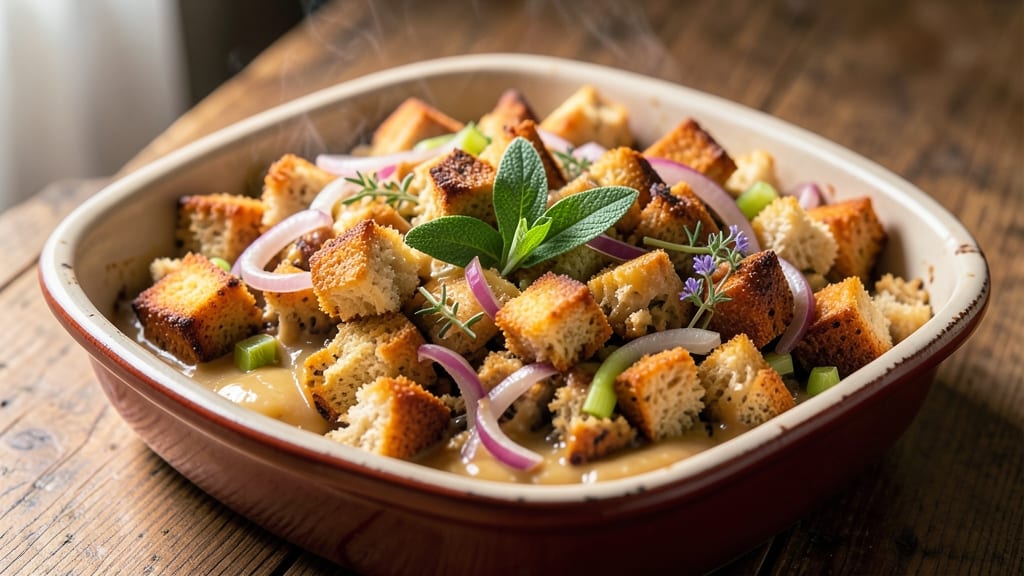
This Amish bread stuffing recipe transforms simple cornbread into a golden, savory centerpiece that steals every holiday table. The secret lies in crispy cornbread cubes baked until edges turn nutty brown, infused with onion, celery, and herbs that sing with tradition.
I’ve perfected this version over years of Thanksgiving gatherings—it’s the kind of stuffing that disappears before the main dish even hits the table.
The magic starts with drying cornbread cubes thoroughly in the oven, ensuring each bite stays tender yet holds its shape. Sautéed aromatics form the flavor base, while a touch of poultry seasoning and sage delivers that classic Amish touch.
This isn’t just a side—it’s the heart of the meal, absorbing gravy like a sponge while delivering rich, herby depth in every forkful.
What makes this recipe stand out is its balance: crispy edges meet moist centers, and the cornbread’s natural sweetness harmonizes with savory herbs. Whether served alongside roasted turkey, ham, or as a standalone dish, it’s the kind of stuffing that turns ordinary meals into memories.
The best part? It’s foolproof—no soggy bottoms or bland flavors here.
For extra depth, consider adding cooked sausage or diced apples, but the classic version shines on its own. Ready in under an hour, this stuffing delivers restaurant-quality results with minimal effort. Let’s get baking—your table is about to get an upgrade.
Ingredients for amish bread stuffing
Golden cornbread cubes meet savory herbs and aromatics for the perfect holiday centerpiece.
| Ingredient | Amount | Notes |
|---|---|---|
| Cornbread 🍞 | 4 cups | Dried cubes, 1-inch pieces |
| Yellow Onion 🧅 | 1 medium | Diced, about 1 cup |
| Celery 🥬 | 3 stalks | Diced, about 1 cup |
| Butter 🧈 | ½ cup | Unsalted, melted |
| Fresh Sage 🌿 | ¼ cup | Chopped, stems removed |
| Fresh Thyme 🌿 | 1 tbsp | Leaves only, chopped |
| Poultry Seasoning 🌶️ | 1 tbsp | Or 1 tsp each thyme, sage, marjoram |
| Salt 🧂 | 1 tsp | Kosher or sea salt |
| Black Pepper 🌶️ | ½ tsp | Freshly ground |
| Chicken Broth 💧 | 1 ½ cups | Low-sodium preferred |
| Whole Eggs 🥚 | 1 whole | Beaten for binding |
| All-Purpose Flour 🌾 | ¼ cup | For texture adjustment |
The cornbread is non-negotiable here—homemade is ideal, but store-bought works if it’s sturdy (like Jiffy or Krusteaz mixes). Look for a loaf with a slightly coarse texture; the crumb should hold its shape when dried. Costco or King Arthur Flour are great for baking your own. Dry the cubes thoroughly in a 200°F oven for 30 minutes—this prevents sogginess. For extra depth, toast them until edges are golden brown. Fresh sage is a must for that classic Amish flavor, but dried works at one-third the amount if you're in a pinch. The onion and celery should be finely diced—think 1/4-inch pieces—so they cook down evenly without becoming mushy.
No poultry seasoning? Mix 1/2 tsp each dried thyme, sage, and marjoram—it’s the same magic. The chicken broth can be swapped for vegetable broth for a vegetarian version, though the flavor will shift slightly. For a richer texture, add 1/4 cup grated Parmesan to the dried cubes before baking. If your cornbread is too moist after baking, spread it on a tray and let it air-dry for 15-20 minutes. The egg acts as a binder, but if you’re avoiding it, 1 tbsp cornstarch mixed with 3 tbsp water works just as well. And trust me, the unsalted butter is worth the upgrade—it adds richness without overpowering the herbs.
This stuffing reheats beautifully—just cover with foil and bake at 350°F for 20-25 minutes until heated through. It keeps for 3-4 days in the fridge, though I recommend making it fresh for maximum crispiness. For make-ahead prep, assemble the stuffing (without baking) up to 24 hours ahead and refrigerate. The dried cubes can be prepped 3 days in advance and stored in an airtight container. Freeze extras for up to 3 months—just thaw overnight in the fridge before reheating. Portion into individual loaf pans if you’re serving a crowd; it’s the easiest way to ensure even baking.
Why You'll Love This Recipe
- No-Fuss Prep: I swear by this recipe because it’s the kind of dish that lets you chop while you chat—just dice onions and celery, toss in crumbled cornbread, and let the butter and sage work their magic. No measuring cups, no stress, just good old-fashioned mixing.
- Sage-Kissed Magic: That fresh sage? It’s the secret weapon here. The moment it toasts in the butter, the whole kitchen smells like Thanksgiving morning—warm, earthy, and impossible to resist. The cornbread soaks up all the flavor, giving every bite that perfect crunchy-soft balance.
- Budget Meal for Crowds: Cornbread’s cheap, onions and celery last forever, and butter stretches when you need it to. I’ve fed a dozen people with this for under $10, and no one ever asks for seconds—because they’re already asking for thirds. It’s the ultimate crowd-pleaser that won’t drain your wallet.
Step-by-step instructions for Amish bread stuffing
A hearty cornbread stuffing with perfect texture and rich, savory flavors—this is how you make it right.
Prepare the Cornbread Base
Preheat your oven to 350°F and spread the 4 cups cornbread (cut into 1-inch cubes) evenly on a baking sheet. Toast for 10-12 minutes until the edges are light golden brown and the cubes feel dry to the touch. This step removes excess moisture and prevents a soggy stuffing.
While the cornbread toasts, finely dice the 1 medium yellow onion and 3 stalks celery into small pieces—about ⅛-inch dice. The smaller the pieces, the more evenly they'll distribute throughout the stuffing. Set these aside in a separate bowl.
Sauté Aromatics and Seasonings
In a large skillet, melt the ½ cup butter over medium heat. Add the diced onion and celery, cooking for 5-7 minutes until the vegetables soften and their edges turn translucent. This step builds flavor without browning.
Reduce heat to medium-low and stir in the ¼ cup chopped fresh sage, 1 tablespoon chopped fresh thyme, 1 tablespoon poultry seasoning, 1 teaspoon salt, and ½ teaspoon black pepper. Cook for another 1-2 minutes until the herbs release their aroma—this ensures every bite is infused with their earthy notes.
Combine and Bind the Mixture
Transfer the sautéed vegetables to a large mixing bowl. Add the toasted cornbread cubes and gently toss to coat evenly. In a separate bowl, whisk together the 1 whole egg and ¼ cup all-purpose flour until smooth. Pour this mixture over the cornbread and stir until fully combined.
Gradually add the 1½ cups chicken broth, mixing just until the liquid is absorbed and the stuffing holds together when pressed. The texture should be moist but not wet—you want it to hold its shape when baked but still be tender. If it feels too dry, add 1-2 tablespoons more broth.
Bake to Golden Perfection
Transfer the stuffing to a greased 9x13-inch baking dish and spread it evenly. Bake at 350°F for 30-35 minutes until the top is deep golden brown and the internal temperature reaches 165°F. The edges should pull away slightly from the dish, indicating it's fully baked.
For extra crispiness, broil for 2-3 minutes at the end, watching closely to avoid burning. Let it rest for 5 minutes before serving—this allows the juices to redistribute and the stuffing to firm up slightly for easier slicing.
Pro Tips For Making Amish Bread Stuffing
- SAUTE ONIONS LOW AND SLOW: I learned this the hard way—drowning onions in butter at high heat turns them into a sad, watery mush. Instead, cook them over medium-low for 10-12 minutes until they’re soft and translucent, not browned. That slow cook keeps them tender and sweet, which is everything in this stuffing.
- CRUMBLE CORNBREAD DRY: Fresh cornbread crumbles into gluey gunk if it’s too moist. Bake leftover cornbread at 300°F for 15 minutes first, then pulse in a food processor until it’s fine but not powdery. (Yes, even if you’re impatient like me.) This ensures your stuffing stays light, not dense.
- DON’T OVERMIX THE STUFFING: I used to beat this like I was punching a pillow—big mistake. Gently fold in the butter, sage, and broth until just combined. Overworking it makes the cornbread turn to paste, and suddenly you’ve got a brick instead of a fluffy, golden dish. Keep it loose.
- ADD BROTH IN STAGES: Dumping all the broth at once guarantees a soggy mess. Start with half, mix well, then add more as needed while baking. This way, the stuffing absorbs moisture evenly without turning into a swamp. (Your future self will thank you.)
Storing and reheating your amish bread stuffing
Fridge Storage Tips
Store leftover stuffing in an airtight container for up to 4 days at 40°F or below. I always use glass Pyrex containers with snap-on lids—they keep the stuffing moist and prevent that dreaded dry, stale texture.
Let it cool completely before sealing to avoid condensation, which can make the cornbread soggy. Reheat portions in a 350°F oven for 15-20 minutes covered with foil, stirring halfway through. 💛
Freezer-Friendly Prep
This stuffing freezes beautifully for up to 3 months—just assemble it (without baking) and refrigerate overnight to firm up. Portion into quart-sized freezer bags or airtight containers, leaving 1-inch headspace for expansion.
Thaw overnight in the fridge before reheating. For extra convenience, freeze the dried cornbread cubes separately—just add them fresh to the other ingredients when ready to bake. This saves time on busy days! ❄️
Reheating for Best Texture
For oven reheating, spread stuffing on a baking sheet and cover loosely with foil. Bake at 325°F for 20-25 minutes until heated through—this gentle heat preserves the crispy edges. Microwave reheating? Use 50% power in 1-minute intervals, stirring between each, until reaching 165°F.
Add 1-2 tablespoons broth if it looks dry. Never skip the rest step—5 minutes at room temperature ensures even heating and prevents a gummy texture. 🔥
Make-Ahead Magic
Assemble the stuffing 24 hours ahead and refrigerate—it actually tastes better after resting! The cornbread cubes can be prepped 3 days in advance and stored in an airtight container at room temperature.
For holiday prep, I often bake the stuffing a day before and reheat it in the oven before serving. This lets the flavors meld beautifully while keeping the texture perfect. Pro tip: Spritz with 1 tablespoon broth before reheating to revive crispiness. 💡
Portion Control
For crowd-pleasing service, divide the baked stuffing into individual loaf pans (about 8x4-inch) before reheating. This ensures even slices and makes serving effortless. Label pans with the reheating instructions—350°F for 15 minutes—so guests can grab and go.
Store extras in single-serving containers for quick lunches. The stuffing reheats just as well the second time, making it perfect for meal prep. 🍽️
Nutrition facts
Frequently asked questions
Can I use regular bread instead of cornbread for this stuffing?
While you can substitute bread, cornbread is traditional for Amish-style stuffing because its slightly sweet, crumbly texture absorbs flavors beautifully. For a similar effect, try sourdough or crusty Italian bread—just cube and dry them thoroughly (at 200°F for 20-25 minutes) to prevent sogginess. Avoid soft white bread, as it lacks the structural integrity for perfect stuffing texture.
How do I keep my stuffing from getting soggy?
The secret is drying the bread cubes completely before mixing. Toast them at 200°F for 30 minutes until crisp, then let them cool. Add broth gradually until just combined—overmixing releases starches that create gummy texture. For extra insurance, bake the stuffing in a 9x13-inch pan with a rack underneath to allow air circulation.
What's the best way to make this vegetarian?
Swap the chicken broth for vegetable broth and replace poultry seasoning with 1 tsp each dried thyme, sage, and rosemary. For extra depth, add ½ cup cooked wild rice or 1 cup diced mushrooms
Can I make this stuffing in a slow cooker?
Assemble the stuffing as directed, then transfer to a greased 6-quart slow cooker. Cook on LOW for 2-2.5 hours with the lid slightly ajar (to allow moisture to escape). For crispier edges, broil for 5 minutes after slow cooking. The slow cooker method works especially well for large gatherings—just stir occasionally to prevent drying.
Why does my stuffing taste bland?
Blandness usually comes from under-seasoning or overcooking. First, ensure you're using fresh herbs (dried herbs lose potency). Second, don't skip the 1-2 minute sauté of aromatics—this builds flavor. For extra depth, add 1 tsp smoked paprika or ½ cup grated Parmesan to the dried bread cubes before baking. Finally, taste as you mix—season gradually!