
Side Dishes
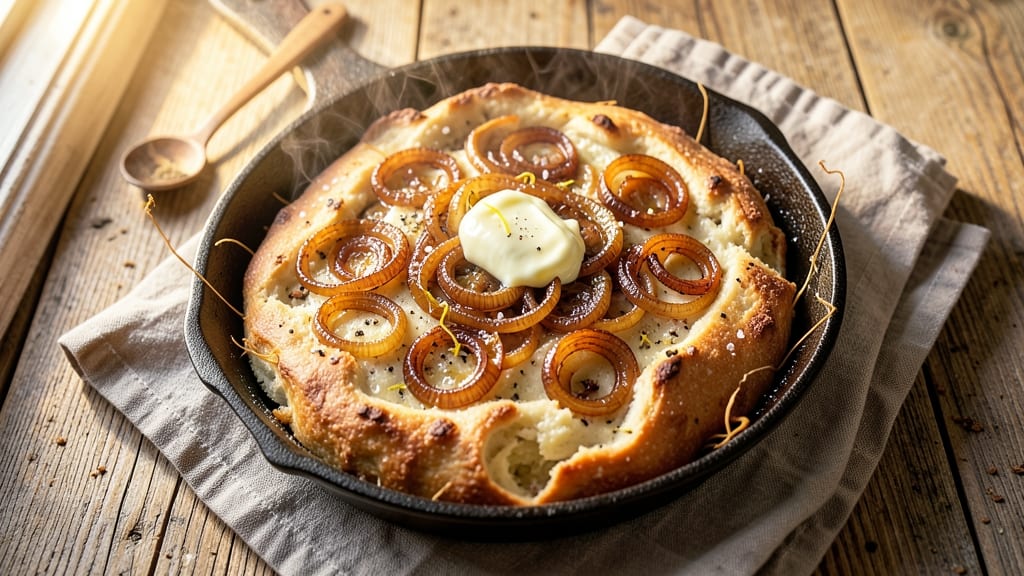
This artisan onion bread recipe delivers a crusty crown with golden swirls of caramelized onions that make every bite unforgettable. The secret lies in a perfect balance of yeasted dough and slow-cooked onions, creating a texture that's crisp outside and tender inside.
I've perfected this technique over years of baking, ensuring the onions stay sweet and the crust achieves that coveted crack—no shortcuts here.
The dough starts with high-protein flour and a touch of honey for subtle sweetness, while the onions caramelize slowly in butter until deep amber. This method ensures rich flavor without burning, and the lamination technique creates those signature swirls that make this bread truly special.
Professional bakers know the importance of proper proofing and scoring, and I've included every detail to help you achieve bakery-quality results at home.
By the time it emerges from the oven, you'll have a loaf with a crispy, crackling crust and layers of gooey caramelized onions throughout. The aroma alone will have everyone gathering around the table, and each slice delivers that perfect combination of textures and flavors.
This bread pairs beautifully with soups, stews, or even as a standalone treat with butter.
Store it wrapped in a linen towel to maintain freshness for days, or freeze slices for quick meals. The versatility makes it perfect for any occasion—whether you're serving a holiday feast or simply craving something comforting. Let's get started on this timeless classic.
Ingredients for artisan onion bread
High-protein flour, sweet onions, and golden butter create this bakery-style masterpiece.
| Ingredient | Amount | Notes |
|---|---|---|
| High-Protein All-Purpose Flour 🌾 | 5 cups | Bread flour preferred for chewiness |
| Active Dry Yeast 🍞 | 2 ¼ tsp | Or 1 packet instant yeast |
| Granulated Sugar 🍯 | 1 tbsp | Or honey for subtle sweetness |
| Salt 🧂 | 1 ½ tsp | Diamond Crystal preferred |
| Unsalted Butter 🧈 | ½ cup | Cold, cubed for caramelizing |
| Yellow Onions 🧅 | 2 medium | Sweet variety for best flavor |
| Honey 🍯 | 1 tbsp | For dough sweetness |
| Large Egg 🥚 | 1 whole | Room temperature for mixing |
| Whole Milk 🥛 | ½ cup | Warmed for yeast activation |
| Olive Oil 🫒 | 1 tbsp | For dough softness |
| Coarse Sea Salt 🧂 | ½ tsp | For final crust sprinkle |
| Cornmeal 🌽 | ¼ cup | For dusting baking sheet |
The onions are everything here—Vidalia or Maui sweet onions caramelize best, but yellow onions work too. King Arthur or Caputo bread flour gives that perfect chew, but all-purpose in a pinch. Butter matters: European-style butter has more fat for richer flavor. For the yeast, Saf-Instant is foolproof—just toss it right into the dry ingredients. Store your flour in the freezer to keep it fresh longer, and always check yeast expiration dates. The honey adds subtle sweetness, but maple syrup works if you prefer.
No butter? Olive oil or coconut oil keeps things vegan, though flavor changes. Short on onions? Caramelized shallots or leeks add depth. The dough needs time to rise—at least 1 hour at room temp, then another 1-2 hours in the fridge for better flavor. For the lamination, keep your hands chilled and work quickly. If you're in a hurry, instant yeast in warm milk speeds things up. The egg binds everything together, but flax egg (1 tbsp ground flax + 3 tbsp water) works for vegan versions.
This bread stays fresh for 3-4 days wrapped in a linen towel, or freeze slices for up to 3 months. Reheat in a 350°F oven for 5-10 minutes to restore crispiness. The crust is best when fully cooled—resist the urge to cut into it too soon! For extra crunch, brush the warm loaf with melted butter. Leftovers? Toast them—nothing beats onion bread toast. Store the dough overnight in the fridge for even better flavor development.
Why You'll Love This Recipe
- No-Knead Magic: I swear by this dough—just mix, let it rise, and forget it. The high-protein flour gives it that sturdy, chewy bite without a single elbow grease moment.
- Butter-Loaded Payoff: That cold, cubed butter baked right into the dough? It melts into golden pockets, turning every slice into a crispy, buttery masterpiece. (Yes, I eat it straight from the pan.)
- Weekday Workhorse: Stale bread? Never. This keeps for days in the fridge, toasts up fresh, and even reheats beautifully in the oven. My go-to for sandwiches, soups, or just dipping in olive oil.
- Budget-Friendly Luxury: You’re getting restaurant-quality flavor for pennies—caramelized onions, rich butter, and that chewy crust. Honestly, it’s the kind of bread that makes you feel fancy without breaking the bank.
Step-by-step instructions for artisan onion bread
This method delivers a perfectly chewy interior, crisp golden crust, and those irresistible caramelized onion swirls.
Activate the Yeast with Warm Milk and Honey
In a small bowl, combine the 0.5 cup warm whole milk (about 110°F—too hot kills yeast) with the 1 tbsp granulated sugar and 2.25 tsp active dry yeast. Let it sit for 5-10 minutes until frothy. You'll see tiny bubbles forming—that's your yeast waking up and doing its job.
Here's the thing—if it doesn't bubble after 10 minutes, your yeast might be dead. Toss it and start fresh. Once it's active, proceed immediately to prevent the yeast from over-fermenting and losing strength.
Mix the Dough and Knead Until Silky
In a large mixing bowl, combine the 5 cups high-protein all-purpose flour and 1.5 tsp salt. Make a well in the center and pour in the yeast mixture, 1 tbsp olive oil, and 1 whole large egg. Use a wooden spoon to mix until you have a shaggy dough.
Turn the dough out onto a lightly floured surface and knead for 8-10 minutes until smooth and elastic. You're looking for a dough that springs back slowly when poked—this means proper gluten development. If it feels sticky, add flour 1 tablespoon at a time until it's just right.
Caramelize the Onions for Maximum Flavor
While the dough rests, heat 1 tbsp olive oil in a skillet over medium-low heat. Add the 2 medium yellow onions, sliced into ¼-inch rings, and cook for 25-30 minutes until deep golden brown and caramelized. Stir occasionally, but don't rush this step—patience creates that sweet, jammy flavor.
When they're done, they should look almost like candy with rich brown spots. Let them cool completely before using in the dough. If they're still warm, they'll melt the butter and make the dough too sticky to handle.
Shape the Dough with Onion Swirls
Roll the rested dough into a 16x12-inch rectangle on a floured surface. Spread the caramelized onions evenly over the surface, leaving a ½-inch border around the edges. Starting from the long side, roll the dough tightly into a log, sealing the seam.
Here's where it gets fun—pinch the dough every 1 inch along the seam to create those classic onion bread folds. Then shape it into a 12-inch circle by gently stretching the dough outward while rotating the circle. This creates that beautiful crown shape with onion swirls peeking through.
Proof and Bake for Perfect Crust
Place the shaped dough on a parchment-lined baking sheet dusted with 0.25 cup cornmeal. Cover with a clean kitchen towel and let it proof in a warm place for 1-1.5 hours until nearly doubled in size. It should look puffy and jiggly when you gently press it.
Preheat your oven to 375°F with a baking stone or inverted baking sheet inside. Brush the risen dough with melted 0.5 cup unsalted butter and sprinkle with 0.5 tsp coarse sea salt. Bake for 25-30 minutes until the crust is deep golden brown and sounds hollow when tapped.
Pro Tips For Making Artisan Onion Bread
- LET YEAST BLOOM: Mix your yeast with warm water and sugar first—wait 5 full minutes until it’s bubbly and frothy before adding flour. I used to skip this, and my dough always took twice as long to rise. That extra patience keeps your bread light and airy, not dense.
- CHILL THE DOUGH: After shaping, refrigerate the dough overnight (or at least 2 hours). The high-protein flour can get tough if worked too much, but cold slows gluten development, giving you a softer crumb and easier handling. Yes, even if you’re eager to bake.
- SALT THE BUTTER: If your unsalted butter tastes bland, add ½ teaspoon salt per cup while melting it for the dough. This balances the caramelized onions later and cuts down on extra salt at the table. Trust me, your bread will taste richer.
- SKIP THE OVER-KNEAD: High-protein flour loves hydration but hates overworking—stop mixing once the dough pulls away cleanly from the bowl (about 8-10 minutes by hand). Over-kneading makes the bread tough, and this dough forgives mistakes better when it’s just tacky, not stiff.
Troubleshooting this dish
Dough Too Sticky?
If your dough feels too sticky during kneading, resist the urge to add too much extra flour. Instead, try wetting your hands slightly and working the dough for another 2-3 minutes—this helps develop gluten without drying it out.
I've found that using King Arthur bread flour (with its higher protein content) reduces stickiness naturally. If you must add flour, do so gradually—just 1 tbsp at a time—and re-knead until smooth. 💫
Onions Burned or Dry?
Caramelizing onions properly takes patience—don't rush this step! If yours turn dark brown too quickly, lower the heat to medium-low and add 1-2 tbsp water to the pan. Stir occasionally and cover with a lid to trap steam.
For best results, use Vidalia onions or Maui sweet onions—they caramelize more evenly. Let them cool completely before mixing into the dough to prevent butter melting.
Bread Didn't Rise Enough?
Underproofing is often caused by cold environments or weak yeast. First, ensure your yeast is fresh—test it in warm milk first. Place your dough in a warm spot (like a turned-off oven with a bowl of hot water inside) for proofing.
If using instant yeast, let it sit for 15-20 minutes before shaping. For extra lift, try adding ½ tsp baking powder to the dough. Remember, dough should double in size—if it doesn't, it needs more time (up to 2 hours).
Crust Too Pale or Soft?
A pale crust usually means the oven wasn't hot enough or the bread baked too long at a lower temperature. Preheat your oven for at least 30 minutes with a baking stone inside. Brush the dough with melted European-style butter before baking for extra browning.
For a crispier crust, bake at 400°F for the first 5 minutes, then reduce to 375°F. A toothpick inserted into the center should come out clean when done.
Onion Swirls Didn't Show?
If your onion swirls disappeared during baking, they were likely too close to the edges. Leave a ½-inch border of plain dough around the edges before rolling. For better visibility, sprinkle a pinch of coarse sea salt over the onions before rolling.
If the dough was too thick, gently press it down slightly with your fingers before shaping. Chill the dough for 15 minutes before shaping to prevent over-stretching.
Dough Overproofed?
Overproofed dough collapses during baking and lacks structure. If your dough rises too much (beyond doubled), it's ready to shape immediately—don't wait! For future batches, reduce proofing time slightly or move the dough to the fridge for 30 minutes to slow fermentation.
A simple test: gently press the dough—if it springs back quickly, it's ready. If it leaves a dent, it needs more time. Keep an eye on it during the final 30 minutes of proofing.
Nutrition facts
Frequently asked questions
What type of flour works best for this artisan onion bread?
High-protein flour like King Arthur bread flour or Caputo Tipo 00 creates the perfect chewy texture. All-purpose flour works in a pinch, but expect slightly less chew. For extra richness, mix 1 cup whole wheat flour into the 5 cups all-purpose—it adds nutty depth while keeping the dough manageable.
Can I make this bread without yeast?
Yes! For a quick version, replace the yeast with 1 tsp baking powder + 1 tsp baking soda and reduce proofing time to 15 minutes. The texture will be denser but still delicious. For a more traditional approach, try sourdough starter (replace yeast with ½ cup active starter)—it adds tangy complexity. Just note the flavor and texture will differ from the yeasted version.
How do I store leftover onion bread?
Wrap the cooled loaf in a linen towel and store at room temperature for 3-4 days to maintain freshness. For longer storage, slice and freeze portions in an airtight container for up to 3 months. To revive, reheat slices in a 350°F oven for 5-7 minutes until crispy. Never refrigerate—it makes the bread stale faster.
What's the secret to perfect caramelized onions?
Low and slow is key! Cook onions over medium-low heat for 25-30 minutes until deep amber, stirring occasionally. Add 1 tbsp water if they brown too quickly. For extra sweetness, use Vidalia or Maui sweet onions. Let them cool completely before mixing into dough to prevent butter melting. Patience here makes all the difference!
Can I add other flavors to this bread?
Try adding 2 tbsp chopped fresh rosemary or 1 tsp garlic powder to the dough for extra aroma. For a herby twist, mix in ¼ cup chopped thyme or parsley with the onions. Keep portions small—too many additions can make the dough too dense. The classic onion flavor should remain the star, but these variations add wonderful complexity.