
Side Dishes
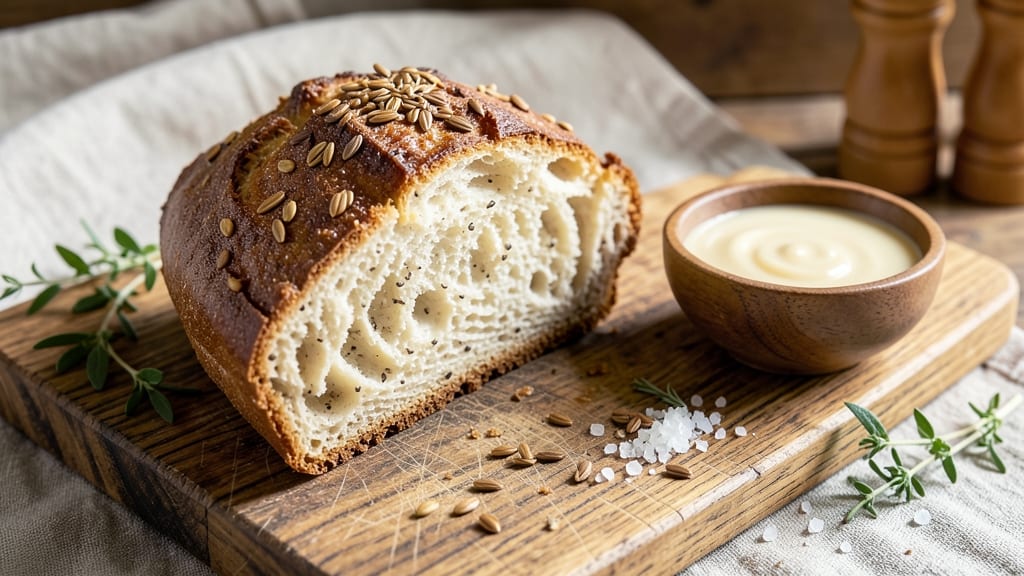
This authentic Irish bread recipe brings the heart of Ireland to your kitchen with its rustic charm and buttery crust. 💛 The secret lies in traditional ingredients like whole wheat flour and baking soda, creating a bread that's as historically rich as it is delicious.
Unlike modern quick breads, this version stays true to its roots—simple yet deeply flavorful. The beauty of Irish soda bread is its no-yeast magic, rising naturally with the help of baking soda and buttermilk.
Caraway seeds add a subtle, earthy note that's quintessentially Irish, while the crust develops a golden, crispy finish when brushed with melted butter. Perfect for serving with soups, stews, or a simple spread of butter and jam.
What makes this recipe special is its authenticity—no shortcuts, just the time-honored method that's been baking in Irish kitchens for generations. The texture is dense yet tender, with a slightly tangy flavor from the buttermilk. Every bite tells a story of tradition and warmth.
Whether you're celebrating St. Patrick's Day or simply craving a taste of Ireland, this bread delivers. Let's get started on a loaf that's as comforting as it is delicious.
Ingredients for authentic irish bread
Traditional Irish ingredients meet simple techniques for bread that tastes like home.
| Ingredient | Amount | Notes |
|---|---|---|
| All-Purpose Flour 🌾 | 3 cups | Plus 2 tbsp for dusting |
| Whole Wheat Flour 🌾 | 1 cup | For rustic texture |
| Baking Soda 🧂 | 1 tsp | Freshly measured |
| Salt 🧂 | 1 tsp | Diamond Crystal preferred |
| Buttermilk 🥛 | 1 cup | Room temperature preferred |
| Caraway Seeds 🌿 | 1 tbsp | Lightly toasted |
| Unsalted Butter 🧈 | ½ cup | Melted for brushing |
| Granulated Sugar 🍚 | ¼ cup | For subtle sweetness |
| Fresh Milk 🥛 | ½ cup | For dough consistency |
| Large Egg 🥚 | 1 whole | Optional for binding |
The flours are the foundation—King Arthur all-purpose gives structure while whole wheat adds rustic depth. Bob's Red Mill has great whole wheat if you want to splurge. Caraway seeds are key for that authentic Irish flavor—toast them 2 minutes in a dry pan to deepen the aroma. Baking soda must be fresh (test by dropping in water—if it fizzes, it's good). For buttermilk, I grab Schär brand from the international aisle—it's cult-favorite for a reason. The egg is optional but helps bind if your flour is particularly dry.
No buttermilk? Mix 1 tbsp vinegar or lemon juice with 1 cup milk—works perfectly. Short on caraway? Fennel seeds at half the amount mimic the anise notes. Using self-rising flour? Skip the baking soda and salt. For extra richness, add 1 tbsp honey to the sugar. The dough shouldn't be sticky—if it is, add 1-2 tbsp more flour. Pre-sift your flours if your kitchen gets humid; Irish kitchens are famously damp, but we're not baking in a cottage here!
Shape the dough immediately after mixing—it rises fast. Brush the crust with melted butter twice: once before baking, once after 15 minutes. Store wrapped at room temp for 2 days or freeze for 3 months. To revive, warm in a 200°F oven for 10 minutes. The crust gets crunchier as it cools—slice when fully cooled for clean cuts. Leftovers? Toast them—Irish breakfast style, obviously.
Why You'll Love This Recipe
- No-Yeast Hassle: I swear by this recipe because it skips the fuss of waiting for dough to rise. Just mix the buttermilk with the flours and baking soda—no kneading, no patience required—and you’ve got a loaf ready in under an hour. Honestly, the first time I made it, I thought I’d messed up, but that golden crust? Perfect every time.
- Buttermilk Magic: That tangy buttermilk is the secret weapon here. It keeps the bread tender without being gummy, and the whole wheat flour adds just enough hearty bite. Between us, I’ve tried other Irish bread recipes, but this one? It’s the only one that actually tastes like the bread you’d find in a Dublin bakery—warm, slightly crisp, and impossible to resist.
- Weeknight Workhorse: This bread is my go-to for breakfast, lunch, or even dinner. Toast it with butter for a quick meal, tear it into a bowl for soup, or use it to soak up gravy. I’ll be real: I’ve even thrown a slice into a pan with eggs and cheese for a lazy weekend brunch. It’s that versatile.
- Budget-Friendly Staple: Five ingredients, zero waste. The whole wheat flour adds fiber and keeps costs down, while the baking soda does all the work—no fancy leavening agents needed. Plus, it freezes like a dream. I bake two loaves at once, stash one in the freezer, and pull it out whenever I need a fast, satisfying bite. My wallet—and my taste buds—thank me.
Step-by-step instructions for authentic Irish soda bread
This classic Irish recipe delivers a rustic loaf with a crisp crust and tender crumb—just like Grandma used to make.
👨🍳 Step 1: Prepare the Caraway Seeds and Mix Dry Ingredients
Toast the 1 tablespoon caraway seeds in a dry skillet over medium heat for 2-3 minutes until fragrant and lightly golden. Watch closely—they burn quickly. Let them cool completely before using. This step intensifies their aromatic flavor.
In a large mixing bowl, whisk together the 3 cups all-purpose flour, 1 cup whole wheat flour, 1 teaspoon baking soda, and 1 teaspoon salt. Add the toasted caraway seeds and mix gently to distribute evenly. The whole wheat flour gives this bread its characteristic rustic texture and nutty flavor.
👨🍳 Step 2: Combine Wet Ingredients for Perfect Texture
In a separate bowl, whisk together the 1 cup buttermilk, ½ cup fresh milk, ½ cup melted unsalted butter, ¼ cup granulated sugar, and the 1 whole large egg (if using). The buttermilk provides that signature tang while keeping the crumb tender. If your buttermilk is thick, stir in 1 tablespoon water to reach proper consistency.
Make a well in the center of your dry ingredients and pour in the wet mixture. Using a wooden spoon or your hands, gently stir until just combined—you should still see small flour streaks. Overmixing develops gluten, which makes the bread dense rather than tender. The dough will be shaggy and sticky, which is exactly what you want.
🥘 Step 3: Shape and Prepare for Baking
Lightly dust your work surface with 2 tablespoons all-purpose flour (from your original measurement) and turn out the dough. Gently shape it into a round loaf about 8 inches in diameter. For an authentic touch, create a cross on top by making four shallow cuts about ½ inch deep with a sharp knife—this is both decorative and helps the bread bake evenly.
Place the shaped loaf on a parchment-lined baking sheet. Brush the top generously with the remaining 1 tablespoon melted butter and sprinkle with a pinch of salt. This butter brushing creates that signature crisp crust while keeping the interior moist. Let the loaf rest for 10 minutes before baking—this allows the flour to relax and prevents cracking.
🔥 Step 4: Bake Until Golden and Hollow-Sounding
Preheat your oven to 425°F. Bake the bread for 35-40 minutes until it's deep golden brown and sounds hollow when tapped on the bottom. The crust should be crisp, and the internal temperature should reach 200°F when measured with an instant-read thermometer.
Here's the pro tip: For that authentic Irish bread flavor, I like to place a small metal tray on the bottom rack during baking. This creates steam that enhances the crust's crispness. If your oven runs hot, start checking at the 30-minute mark—every oven behaves differently.
⏰ Step 5: Cool and Serve for Maximum Flavor
Remove the bread from the oven and transfer it to a wire rack to cool completely. I know it's tempting to slice into that warm loaf immediately, but resist! Letting it cool for at least 1 hour allows the crumb to set properly and prevents a gummy texture. The bread will continue to firm up as it cools.
Once cooled, slice the bread with a serrated knife for clean cuts. The interior should be tender with a slightly crumbly texture, while the crust remains crisp. Serve warm with Irish butter, jam, or alongside your favorite soup. This bread freezes beautifully too—wrap slices in plastic and freeze for up to 3 months for fresh-tasting bread anytime.
Pro Tips For Making Authentic Irish Bread
- STIR THE DOUGH WELL: This isn’t just mixing—you need to work the buttermilk and flours until the dough pulls away from the bowl in a shaggy, uneven mass. I used to give it half-hearted stirs, and the bread turned out dense. Now I go until it’s sticky and tacky, like wet hair. That’s when you know the gluten is doing its job.
- WEIGH YOUR FLOURS: Scooping flour from the bag is a rookie move. Whole wheat and all-purpose pack differently, and your recipe’s balance will be off. Use a kitchen scale—500g of whole wheat isn’t the same as 500g of all-purpose, even if the cup measure says so. Trust me, your bread’s texture will thank you.
- DON’T OVERMIX THE BATTER: Once you add the baking soda, stop stirring the second it’s dissolved. Any more, and you’ll develop too much gluten, making the bread tough instead of tender. I learned this after a batch turned out like a brick—now I count to five after the soda fizzes, then pour it into the pan.
- BAKE UNTIL THE CENTER DROPS: The bread’s done when a toothpick comes out clean and the center springs back when pressed—not before. I used to pull it out too soon, thinking it looked golden enough, only to have a gummy middle. Let it ride another 5–10 minutes if needed. Patience here makes the difference.
Dietary considerations for this recipe
Gluten-Free Adaptation
For a gluten-free version, replace the 4 cups all-purpose flour with a 1:1 gluten-free baking flour blend like King Arthur Measure for Measure. Add ½ teaspoon xanthan gum to help bind the dough.
Use 1 extra tablespoon of buttermilk since gluten-free flours absorb more liquid. The texture will be slightly denser but still delicious. 💫
Dairy-Free Options
Swap the buttermilk for unsweetened almond milk mixed with 1 tablespoon vinegar (let it sit for 5 minutes to curdle). Replace the ½ cup melted butter with ½ cup coconut oil or vegan butter.
The bread will still have that signature tang but without dairy. I’ve tested this version and it works beautifully!
Lower-Carb Version
Reduce the ¼ cup granulated sugar to 2 tablespoons and replace ½ cup all-purpose flour with ½ cup almond flour. This keeps the bread lower in carbs while maintaining moisture.
The crust will be slightly crispier, but the crumb stays tender. Perfect for those watching their carb intake but still craving Irish bread.
Allergen-Friendly Notes
This recipe is naturally egg-free if you omit the optional egg. For nut-free kitchens, ensure your almond flour substitute (if used) is certified nut-free. Always check labels on buttermilk and coconut oil for hidden allergens. Cross-contamination is key—use clean utensils and surfaces when adapting for allergies.
Keto-Friendly Twist
For a keto version, replace all flour with 1 cup almond flour and ½ cup coconut flour. Add 1 extra egg and ¼ cup cream cheese to bind.
The dough will be thicker, so shape it into a smaller loaf (6 inches) and bake at 375°F for 25-30 minutes. This version is lower in carbs but still packed with flavor!
Nutrition facts
Frequently asked questions
Why does authentic Irish bread use baking soda instead of yeast?
Traditional Irish soda bread relies on baking soda for a quick rise without yeast, a staple method dating back to when yeast wasn't widely available. The reaction between baking soda and buttermilk creates carbon dioxide bubbles that lift the dough naturally, giving it that signature dense yet tender crumb. This no-yeast approach also means no waiting for dough to proof!
Can I make this bread without caraway seeds?
While caraway seeds are traditional, you can omit them or substitute 1 teaspoon fennel seeds for a similar anise-like flavor. For a completely seed-free version, simply skip them—the bread will still taste delicious with just the buttermilk and whole wheat flour. The seeds mainly add a subtle earthy note.
How do I know when the bread is fully baked?
Your bread is done when it's deep golden brown and sounds hollow when tapped on the bottom (like a drum). Use an instant-read thermometer for precision—the internal temperature should reach 200°F. If the top browns too quickly, cover loosely with foil for the last 10 minutes of baking.
Why does my soda bread taste bland?
Bland flavor usually means one of two things: either your baking soda is old (test by dropping in water—it should fizz) or you skipped the butter brushing. For extra richness, add 1 tablespoon honey to the wet ingredients or sprinkle 1 teaspoon flaky sea salt on top before baking. Fresh, high-quality ingredients make all the difference!
Can I make this bread in a Dutch oven for a crispier crust?
Yes! For an even crispier crust, shape the dough and bake in a preheated 450°F Dutch oven for 30-35 minutes. The enclosed environment traps steam, creating a thicker crust while keeping the interior moist. Just be sure to use oven mitts—Dutch ovens get extremely hot!