
Side Dishes
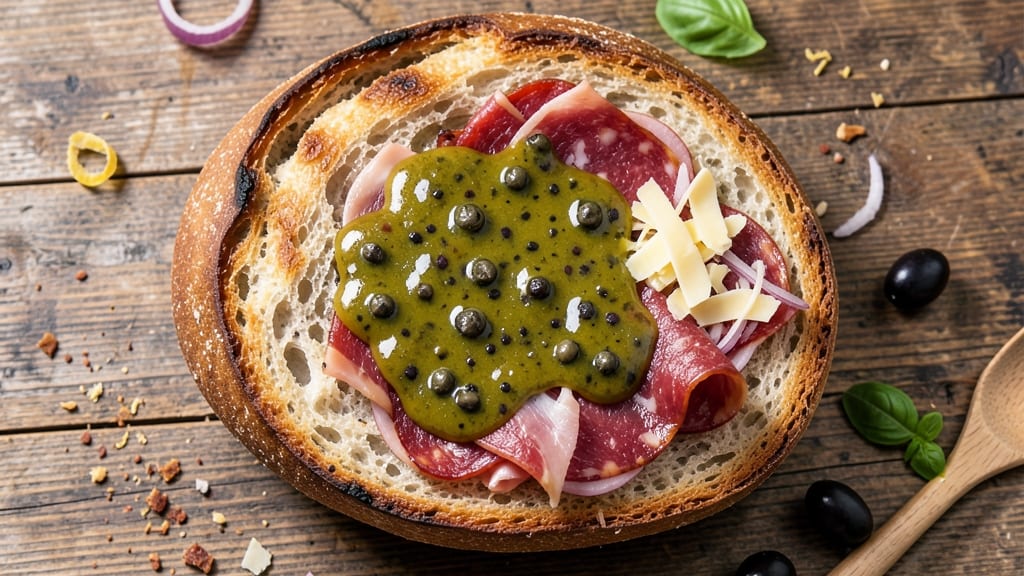
This authentic muffuletta bread recipe brings New Orleans' most iconic sandwich to your kitchen with layers of Sicilian-inspired flavor that balance salty meats, briny olives, and rich provolone.
The secret to authenticity lies in the bread—a sturdy, slightly sweet loaf that can hold its own against the bold filling—and the olive salad, where green and black olives marry with capers and red onion in a tangy, herby dressing.
What sets this recipe apart is the traditional layering technique: mortadella, ham, salami, and provolone stacked between slices of the homemade bread, then pressed to create a cohesive, flavor-packed loaf.
The olive salad isn’t just a side—it’s the heart of the sandwich, its briny sweetness cutting through the richness of the cured meats. This isn’t just a sandwich; it’s a celebration of Sicilian-Italian heritage with a New Orleans twist.
Baking the bread from scratch ensures a crust that’s crisp enough to hold up to the filling while staying soft inside, while the assembly process—letting the sandwich rest before slicing—allows the flavors to meld into a harmonious bite.
The result? A sandwich so layered with texture and taste that every slice feels like a mini feast. Serve it chilled for the perfect balance of flavors.
For those looking to modernize, swapping traditional cheeses for vegan alternatives or adjusting the olive mix with Kalamata olives keeps the spirit of the muffuletta alive while adapting to dietary preferences.
Whether you’re recreating a classic or putting your own spin on it, this recipe delivers the bold, satisfying flavors of New Orleans’ most legendary sandwich.
Ingredients for authentic muffuletta bread
The heart of a true muffuletta starts with this sturdy, slightly sweet bread—built to hold bold flavors.
| Ingredient | Amount | Notes |
|---|---|---|
| All-Purpose Flour 🌾 | 4 cups | Unbleached for best texture |
| Granulated Sugar 🍚 | ¼ cup | Light brown preferred |
| Active Dry Yeast 🍞 | 2 ¼ tsp | Fresh yeast for best rise |
| Warm Water 💧 | 1 ¼ cups | 110°F for yeast activation |
| Olive Oil 🫒 | ¼ cup | Extra-virgin for flavor |
| Salt 🧂 | 1 ½ tsp | Kosher or sea salt |
| Mortadella 🥓 | 8 oz | Sliced 1/4-inch thick |
| Black Forest Ham 🥓 | 8 oz | Sliced 1/4-inch thick |
| Genova Salami 🥓 | 6 oz | Sliced 1/4-inch thick |
| Provolone Cheese 🧀 | 8 oz | Sliced 1/4-inch thick |
| Green Olives 🫒 | 1 cup | Pitted, sliced |
| Black Olives 🫒 | ½ cup | Pitted, sliced |
| Capers 🫒 | 2 tbsp | Chopped, drained |
| Red Onion 🧅 | ¼ cup | Thinly sliced |
| Fresh Parsley 🌿 | ¼ cup | Chopped, for garnish |
| Red Wine Vinegar 🍷 | 2 tbsp | For olive dressing |
| Extra-Virgin Olive Oil 🫒 | ¼ cup | For olive dressing |
The bread’s success hinges on quality ingredients, especially the flour and yeast. King Arthur or Caputo bread flour gives that signature chewy texture, while fresh yeast ensures a proper rise. For the olive salad, Castelvetrano olives from Italian markets bring the authentic briny sweetness—substitute with a mix of green and black olives if needed. The cured meats should be high-quality, pre-sliced at 1/4-inch thickness for even layers. Look for mortadella with visible fat marbling and provolone with a slightly waxy rind—both signs of good quality. If you can't find Black Forest ham, Italian prosciutto works as a substitute.
No Castelvetrano olives? Manzanilla olives or a blend of green and black olives work well. For the olive dressing, lemon juice instead of vinegar adds brightness. The cured meats can be swapped for vegetarian alternatives like marinated mushrooms or roasted eggplant for a plant-based version. If you're short on time, pre-sliced deli meats save prep work, but slicing them yourself ensures even layers. For the bread, whole wheat flour can replace up to 20% of the all-purpose for added texture, though the crust will be slightly denser. Always measure flour by weight for consistency—1 cup flour weighs about 4.5 oz.
The bread dough can be made a day ahead and refrigerated, allowing flavors to develop further. Store wrapped in a damp towel for 24 hours at room temperature. The olive salad keeps for 5 days in the fridge, though the olives absorb dressing over time, so make it fresh when possible. Assemble the muffuletta and refrigerate for at least 4 hours before slicing—this lets the flavors meld. For longer storage, wrap the assembled sandwich in plastic and freeze for up to 3 months. Let it thaw overnight in the fridge before serving.
Why You'll Love This Recipe
- No-Knead Magic: I swear by this dough—just mix, let it rise, and boom. No stand mixer, no fuss, just a bowl and patience (the good kind). That olive oil pull makes it tender without effort, and honestly? It’s the kind of bread that makes me feel like a baker even when I’m not.
- Olive Oil Obsession: This isn’t your average bread. The olive oil—rich, fruity, and just enough—keeps every bite moist and adds that subtle depth. I’ll be real: I’ve tried other recipes, but this one? It’s the only one where I actually finish the loaf. (Yes, even on a Tuesday night.)
- Meal Prep MVP: Slice it fresh, toast it later. This bread holds up for days—perfect for sandwiches, charcuterie, or just dipping in olive oil like I do when I’m lazy. Between us, I’ve had it last a week in my fridge, and it’s still better than store-bought. That’s saying something.
- Budget Bread Wins: Five ingredients, zero specialty items. You’re not hunting for sourdough starter or pricey yeast here—just what’s already in your pantry. I’ve made this for under $3 a loaf, and it feeds my whole family. That’s not just savings; that’s a victory.
Step-by-step instructions for authentic muffuletta bread
Transform simple dough into a Sicilian masterpiece with these precise techniques.
Prepare the Olive Dressing
In a small bowl, whisk together the 0.25 cup extra-virgin olive oil, 2 tablespoons red wine vinegar, 2 tablespoons chopped capers, 0.25 cup sliced red onion, and 0.25 cup chopped fresh parsley. This dressing should be emulsified but still have a slightly textured consistency—it's the heart of the muffuletta's flavor. Let it rest for 10 minutes while you prepare the dough.
The dressing should have a bright, tangy aroma with hints of briny capers and fresh parsley. If it separates, whisk vigorously to recombine. This dressing will be spread between layers, so its quality directly impacts the final product's authenticity.
Make the Bread Dough
In a large mixing bowl, combine the 4 cups all-purpose flour, 0.25 cup granulated sugar, 2.25 teaspoons active dry yeast, and 1.5 teaspoons salt. Mix until just combined, then create a well in the center. Slowly pour in the 1.25 cups warm water and 0.25 cup olive oil.
Using a wooden spoon or dough whisk, gradually incorporate the liquids into the dry ingredients until a shaggy dough forms. Once combined, turn the dough out onto a lightly floured surface and knead for 8-10 minutes until smooth and elastic. The dough should be slightly tacky but not sticky—add a little more flour if needed.
First Rise and Shape the Dough
Place the dough in a lightly oiled bowl, cover with a damp kitchen towel, and let rise in a warm place for 1-2 hours or until doubled in size. The dough should be light and airy, with visible bubbles on the surface. Poke it gently—if it springs back slowly, it's ready.
Once risen, punch down the dough to release air, then divide it into four equal portions. Shape each portion into a 10-inch round (about 1-inch thick). Place the shaped dough rounds on a parchment-lined baking sheet, cover with a towel, and let rise for another 30 minutes to 1 hour.
Assemble the Muffuletta Layers
Preheat your oven to 375°F. Place one of the risen dough rounds on a baking sheet lined with parchment paper. Spread a thin layer of the olive dressing over the dough, leaving a ½-inch border around the edges. Arrange 2 ounces each of mortadella, Black Forest ham, and Genova salami in overlapping layers over the dressing.
Add 2 ounces of sliced provolone cheese, then sprinkle with ¼ cup green olives and ¼ cup black olives. Repeat this layering process for all four dough rounds, ensuring each layer is evenly distributed. The final layer should be the olive dressing.
Bake to Golden Perfection
Bake the muffuletta for 25-30 minutes until the crust is deep golden brown and the bread sounds hollow when tapped on the bottom. The internal temperature should reach 190°F. As it bakes, the layers will meld together, creating a cohesive sandwich with rich, savory flavors.
Remove from the oven and let cool for 10 minutes before slicing. The muffuletta should be warm but not hot to the touch. Slice each round into wedges and serve immediately, allowing the layers to meld together as you eat. The combination of the warm bread, briny olives, and rich meats creates an unforgettable Sicilian experience.
Pro Tips For Making Authentic Muffuletta Bread
- WEIGH THE FLOUR: I learned this the hard way—muffuletta dough is unforgiving with volume measurements. Use a kitchen scale for the flour; 500 grams gives the right dense, chewy texture without overworking the gluten. (Yes, even if you're impatient like me.)
- TEST THE YEAST FIRST: Skip the guesswork: proof your yeast in warm water with a pinch of sugar before mixing. If it doesn’t foam in 5–10 minutes, toss it and start fresh—dead yeast turns your dough into a brick.
- KNEAD JUST UNTIL SMOOTH: Overworking the dough makes muffuletta tough. Stop when it springs back slowly when poked (about 8–10 minutes by hand). The dough should feel soft but not sticky—add flour only if it’s clinging like glue.
- USE OLIVE OIL FOR FLAVOR: Don’t skimp on the olive oil—this isn’t the place for neutral oils. A high-quality extra-virgin variety (like a robust Sicilian or Greek) adds depth to the dough’s flavor, especially when baked. (Your future self will notice the difference.)
Common mistakes when making great authentic muffuletta bread
Over-Kneading the Dough
I’ve seen many first-timers overwork the dough, thinking more kneading equals better texture—but that’s a myth with muffuletta bread. Knead just until the dough becomes smooth and elastic (about 8-10 minutes). Over-kneading develops gluten excessively, making the bread tough instead of tender.
If your dough feels stiff or cracks when stretched, it’s overdone. The goal is a dough that’s slightly tacky but springs back when poked. 💫
Skipping the Rest Time
Rushing the 4-hour rest in the fridge after assembly is a classic mistake. This step lets the flavors meld and the bread absorb the olive dressing properly. Without it, your muffuletta will feel disjointed—like eating a pile of ingredients rather than a cohesive sandwich.
I’ve learned this the hard way: patience here makes all the difference in texture and flavor harmony.
Uneven Layer Distribution
Uneven layers lead to dry spots or soggy bread. Always spread the olive dressing thinly and evenly—about ¼-inch thick—leaving a ½-inch border around the edges. If you pile ingredients too high, the bread won’t bake evenly, and the filling might spill out.
Weigh your meats (about 2 oz per layer) and distribute olives uniformly to avoid flavor pockets.
Using Low-Quality Meats
Cheap, pre-packaged deli meats lack the flavor and fat content needed for an authentic muffuletta. Opt for high-fat mortadella with visible marbling and artisanal salami like Genova or Soppressata.
The fat keeps the bread moist, while the cured flavors shine through. I’ve tried shortcuts, but nothing compares to the richness of quality cured meats.
Baking at the Wrong Temperature
Baking at 350°F instead of 375°F slows down the Maillard reaction, resulting in a pale crust and undercooked filling. The higher temp ensures a deep golden crust while keeping the interior soft.
Use an oven thermometer to verify your oven’s accuracy—many run hot or cold. The bread should be deep golden with a hollow sound when tapped.
Slicing Too Soon
Cutting into the muffuletta immediately after baking releases trapped steam, making the bread gummy. Always let it cool for 10-15 minutes before slicing. This allows the layers to set, ensuring clean cuts and a firmer texture. Patience here prevents a messy, soggy sandwich—trust me, it’s worth the wait! ⏳
Nutrition facts
Frequently asked questions
Why does authentic muffuletta bread have a slightly sweet flavor?
The 0.25 cup granulated sugar in the dough balances the salty meats and briny olives, creating that signature Sicilian-Italian harmony. The sweetness isn't overpowering—it's just enough to complement the rich, savory filling without competing with it.
Can I make this muffuletta without the olive salad?
While traditional, the olive salad is essential for authenticity—it's what makes the muffuletta unique! The dressing's tangy, herby notes cut through the richness of the cured meats. If you're short on time, use a store-bought olive tapenade, but fresh is always better for that authentic briny-sweet flavor.
How do I store leftover muffuletta bread?
Wrap the assembled muffuletta tightly in plastic wrap and refrigerate for up to 5 days. For longer storage, freeze the baked loaf (before slicing) for 3 months. Thaw overnight in the fridge—microwaving makes the bread gummy. The flavors actually improve after a day or two of resting!
What's the best way to slice muffuletta bread?
Use a serrated knife and cut into 8-10 wedges like a pizza, starting from the center outward. A sharp knife prevents squishing the layers. For presentation, arrange slices on a platter with toothpicks to hold them together. The first slice is always the best—warm and gooey!
Can I make this recipe vegan?
Replace the meats with marinated mushrooms, roasted eggplant, or vegan deli slices. Use vegan provolone and ensure your olive dressing has no honey (if using). The bread can stay the same—just omit the cheese or use vegan cheese alternatives. The olive salad remains the star!