
Side Dishes
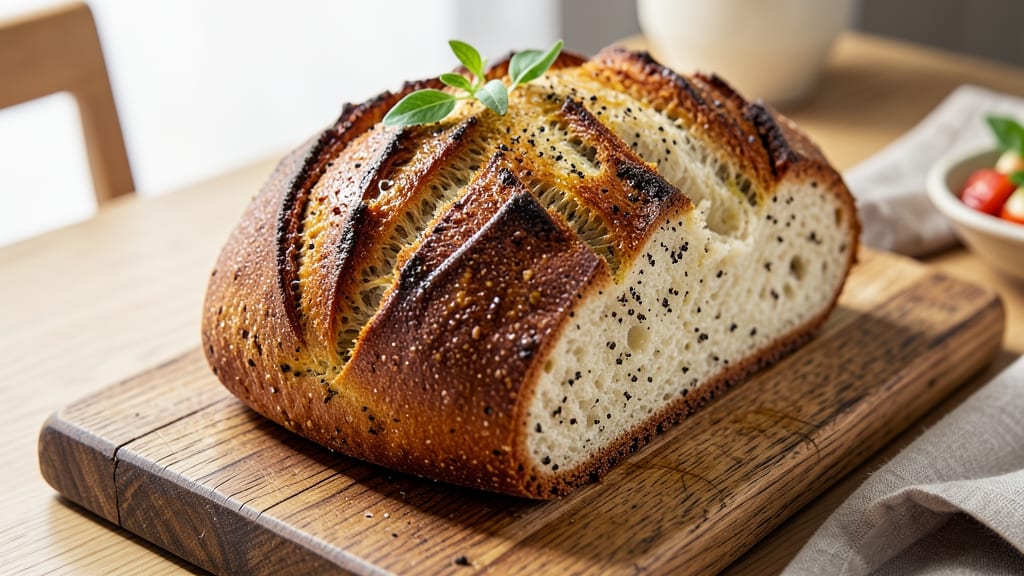
This 50 whole wheat bread recipe delivers a no-knead loaf with a crispy crust and soft, airy crumb—perfect for sandwiches, toast, or garlic bread. 💛 I developed this method after struggling with dense, heavy whole wheat loaves that lacked the lightness of white bread.
The secret lies in a long fermentation and precise hydration balance, transforming whole wheat into a bread that rivals artisanal sourdough.
What sets this recipe apart is its foolproof technique for home ovens. You’ll mix, rest, shape, and bake—no stand mixer or advanced skills required. The dough develops flavor overnight in the fridge, creating a rich, nutty depth without sacrificing tenderness.
Whole wheat flour absorbs moisture differently, so we adjust the hydration and use vital wheat gluten to ensure a light, open crumb rather than a compact one.
By the time you pull this loaf from the oven, you’ll have a golden-brown crust with a satisfying crackle and a soft, pillowy interior that’s ideal for slicing. The bread stays fresh for days, making it perfect for meal prep or gifting.
Whether you’re a beginner or an experienced baker, this recipe delivers professional results with minimal effort.
For extra flavor, try adding seeds, herbs, or olive oil to the dough. Store leftovers wrapped at room temperature or freeze for up to 3 months. Let’s get started—your kitchen will soon smell like a bakery!
Ingredients for 50 whole wheat bread
Nine essential ingredients transform dense whole wheat into a light, airy loaf with a crispy crust.
| Ingredient | Amount | Notes |
|---|---|---|
| Whole Wheat Flour 🌾 | 3 ½ cups | High-protein, bread flour preferred |
| Vital Wheat Gluten 🌾 | ½ cup | Essential for light texture |
| Instant Yeast 🍞 | 1 tsp | Fresh or active dry |
| Granulated Sugar 🍚 | ½ tsp | Helps yeast activation |
| Salt 🧂 | 1 ½ tsp | Kosher or sea salt |
| Warm Water 💧 | 1 ½ cups | 105-110°F for yeast activation |
| Olive Oil 🫒 | 2 tbsp | Extra-virgin for richness |
| Honey 🍯 | 1 tbsp | Enhances browning and flavor |
| Sesame Seeds 🌱 | 1 tbsp | Optional for topping |
| Poppy Seeds 🌱 | 1 tbsp | Optional for topping |
| Cornmeal 🌽 | ¼ cup | For dusting baking sheet |
The whole wheat flour makes or breaks this recipe—King Arthur or Bob’s Red Mill are my go-tos for consistent results. Look for high-protein content (12-14%) to mimic white bread’s lightness. Vital wheat gluten is non-negotiable; it’s what gives this bread its signature airy crumb. Most grocery stores carry it near the flour section, but if you’re in a pinch, Amazon delivers fast. The yeast needs to be fresh—if it’s over a month old, toss it. For the water, 105-110°F is ideal (like a warm bath), but if you don’t have a thermometer, just make sure it’s warm to the touch but not hot. The honey and olive oil add depth—don’t skip them, even if you’re not sweet-toothed.
No vital wheat gluten? Substitute with an extra 0.25 cup whole wheat flour, but expect a denser loaf. Running low on sesame seeds? Poppy seeds, flaxseeds, or even everything bagel seasoning work beautifully. The cornmeal topping is optional but worth it—it creates that perfect golden crust. If you’re making this ahead, prep the dough the night before and let it ferment in the fridge for up to 24 hours—the flavor develops even more. The honey can be swapped for maple syrup if you prefer, but it’ll have a slightly different caramelization. And if you’re worried about the dough being too sticky, add 1 tbsp more flour during mixing—it’s better to have a slightly thicker dough than one that’s too wet.
This dough is a two-day project, but it’s worth it. Shape the loaf 24 hours before baking and let it ferment in the fridge—this slow rise is key to that professional bakery texture. Once baked, let it cool completely on a wire rack (at least 2 hours) to prevent a gummy crumb. Store wrapped at room temperature for 3-4 days or freeze for up to 3 months. For extra crunch, toast slices before serving. The bread reheats beautifully—wrap slices in foil and warm in a 350°F oven for 5-7 minutes. Trust me, the first slice out of the oven is worth the wait.
Why You'll Love This Recipe
- No-Knead Magic: I swear by this—just mix, wait, and bake. The vital wheat gluten and instant yeast do all the heavy lifting while I sip coffee.
- Hearty, Not Heavy: That touch of sugar balances the whole wheat flour, giving it a satisfying chew without tasting like a health lecture. (Yes, even my kids ask for seconds.)
- Bulk-Friendly Loaves: Make one loaf or five—this recipe scales perfectly. Freeze extras for toast or sandwiches later; the gluten keeps them fresh for weeks.
- Pocketbook Perk: Whole wheat flour and basic pantry staples mean I’m not breaking the bank. A single batch feeds my family for days without guilt.
Step-by-step instructions for no-knead whole wheat bread
Here's how to craft a bread with a crispy crust and airy interior—no kneading required.
👨🍳 Step 1: Mix the Dough with Precision
In a large mixing bowl, combine the 3.5 cups whole wheat flour and 0.5 cup vital wheat gluten. This gluten boost is what gives your bread that light, airy texture instead of the dense, heavy result you might expect from whole wheat alone. Sift them together lightly to eliminate any lumps and create a fine base for your dough.
In a separate small bowl, whisk together the 1.5 cups warm water (between 105-110°F—test with your finger: it should feel warm but not hot), 2 tbsp olive oil, 1 tbsp honey, 1 tsp instant yeast, 0.5 tsp granulated sugar, and 1.5 tsp salt. The warm water activates the yeast immediately, while the honey and sugar provide just enough sweetness to encourage fermentation. Pour this liquid mixture into the dry ingredients and stir with a wooden spoon or dough whisk until fully combined.
Let the dough rest for 5 minutes while you prepare your workspace. This brief pause helps the flour absorb the liquid and the gluten begin to develop naturally. You'll notice the dough will look shaggy and uneven at this stage—that's completely normal and exactly what we want for this no-knead method.
🍳 Step 2: Develop the Dough Through Resting
After the initial rest, cover the bowl with a damp kitchen towel or plastic wrap and let it sit at room temperature for 12-18 hours. I like to place mine in a warm spot (like on top of the refrigerator) to encourage fermentation. The dough will rise dramatically during this time, nearly doubling in size as the yeast works its magic.
Here's the thing about whole wheat dough—it's trickier to predict than white flour dough. You're looking for the dough to rise until it's about 50-75% larger than its original volume and has a few small bubbles on the surface. If it doesn't rise much after 12 hours, give it another 2-4 hours. The longer it ferments, the more flavorful your bread will be, but don't let it exceed 24 hours or the yeast may exhaust itself.
When the dough has reached its peak, it should be jiggly in the center when gently shaken. Poke it with your finger—if it springs back slowly, it's ready. If it springs back quickly, let it rest a bit longer. This test is more reliable than time alone for whole wheat dough.
🔥 Step 3: Shape and Score for Perfect Rise
Lightly dust your work surface with 0.25 cup cornmeal (this prevents sticking and adds a nice texture to the bottom of your bread). Turn out the dough and gently shape it into a round loaf by folding the edges toward the center and sealing them. Don't worry about getting it perfectly round—this isn't a baguette, and imperfections will just add character.
Place the shaped dough on a parchment-lined baking sheet, seam-side up. Cover it again with the damp towel and let it rise for another 1-2 hours until it's puffy and has risen about 25-50% more. The second rise is crucial for developing that soft, airy crumb we're after. If your kitchen is cold, this might take longer—just keep an eye on it.
About 20 minutes before baking, preheat your oven to 425°F. While it heats, use a sharp serrated knife or razor blade to score the top of the dough in a simple crosshatch pattern. This isn't just for looks—it helps control where the bread expands and prevents it from cracking unpredictably during baking.
🔥 Step 4: Bake to Golden Perfection
Place the baking sheet in the center rack of your preheated oven and bake for 30-35 minutes. The bread is done when the crust is deep golden brown and sounds hollow when you tap the bottom. If it browns too quickly, tent it loosely with aluminum foil after 20 minutes to prevent over-browning while it continues cooking.
Here's where attention to detail pays off: the internal temperature should reach 190-200°F at the center. Use an instant-read thermometer to check—whole wheat bread can vary more than white flour bread, so don't rely solely on color. The bread should be firm to the touch but still slightly soft in the center when you cut into it.
For that extra-crispy crust, I like to transfer the bread to a wire rack and immediately brush the top with a little melted butter (not in the ingredients, but trust me on this). This adds richness and helps set the crust. Let it cool completely before slicing—this gives the crumb time to set properly and prevents a gummy texture.
🍽️ Step 5: Top and Serve
While the bread is still warm, sprinkle the top evenly with 1 tbsp sesame seeds and 1 tbsp poppy seeds. Press them gently into the crust so they adhere. These seeds add a delightful crunch and visual appeal, plus they pair beautifully with the nutty flavor of the whole wheat.
Let the bread cool completely on the wire rack before slicing—this is crucial for whole wheat bread, which can be gummy if cut too soon. The seeds will crisp up as the bread cools, creating that perfect textural contrast between the soft crumb and crunchy topping. Store any leftovers in an airtight container at room temperature for up to 3 days, or freeze for up to 3 months for fresh-tasting bread whenever you need it.
Pro Tips For Making 50 Whole Wheat Bread
- Mix the Gluten First: Whole wheat flour can be dense—sift the vital wheat gluten directly into the dry flour before adding liquids. This creates a lightweight base that actually rises better, and you’ll notice the bread’s texture improves without extra effort.
- Weigh Your Flour: Scooping whole wheat flour by volume leads to dry, dense loaves. Use a kitchen scale for the whole wheat flour and gluten—this recipe’s success hinges on precise ratios, especially when mixing those two. (Yes, even if your measuring cups are "clean.")
- Let the Dough Rest: After kneading, cover the dough and let it sit for at least 30 minutes before shaping. This relaxes the gluten, making it easier to handle and preventing a tough, chewy crumb. I learned this the hard way—skipping it turns your bread into a brick.
- Steam the Oven: Place a metal tray on the oven rack before preheating, then add 1 cup of boiling water when loading the bread. The steam mimics a bakery’s environment, giving you a crisp crust without burning the top. (No, you don’t need a fancy steamer—this works every time.)
Best sauces and condiments for these flavors
Classic Garlic Butter
Nothing beats the simplicity of garlic butter on warm whole wheat bread. Melt 2 tbsp unsalted butter with 2 minced garlic cloves and a pinch of salt in a small pan over low heat for 2 minutes.
Spread this rich, aromatic butter on freshly sliced bread—it’s the ultimate sandwich base or toast topping. For extra depth, add ½ tsp dried parsley or a dash of lemon zest. 🌟
Herb-Infused Olive Oil
Whole wheat bread pairs beautifully with herb-infused olive oil. Heat ¼ cup extra-virgin olive oil with 1 tbsp chopped fresh rosemary, 1 tbsp chopped thyme, and a pinch of red pepper flakes in a small saucepan over low heat for 5 minutes.
Strain and drizzle over toasted bread slices for a fragrant, Mediterranean-inspired finish. Store leftovers in the fridge for up to 1 week.
Spicy Honey Mustard
This sweet-and-spicy combo elevates sandwiches and toast. Mix 2 tbsp Dijon mustard, 1 tbsp honey, 1 tsp apple cider vinegar, and ½ tsp cayenne pepper in a small bowl. Thin with 1 tsp water if needed.
Spread on sliced bread and broil for 2 minutes for a caramelized crust. The honey balances the cayenne, making it perfect for grilled cheese or open-faced sandwiches. 🔥
Creamy Avocado Spread
For a healthier option, mash ½ ripe avocado with 1 tbsp Greek yogurt, ½ tsp lime juice, and a pinch of salt. Spread on toasted bread and top with sliced radishes or cherry tomatoes.
The creamy texture and healthy fats make this a great breakfast or snack option. Store the spread in an airtight container for 2 days—add lime juice just before serving to prevent browning.
Smoky Chipotle Cream Cheese
Add a smoky kick with this flavorful spread. Blend 4 oz cream cheese, 1 tsp adobo sauce (from canned chipotles), 1 tsp honey, and ½ tsp smoked paprika until smooth.
Spread on bread and top with sliced jalapeños or pickled red onions for a tangy contrast. This works wonders for breakfast sandwiches or as a dip for sliced bread. 🌶️
Sweet Almond Butter
For a nutty, protein-packed option, spread almond butter on toasted bread. Warm 2 tbsp almond butter with 1 tsp maple syrup and a pinch of cinnamon in a small saucepan over low heat.
Top with banana slices or chopped walnuts for crunch. This combo is perfect for a quick breakfast or snack—store leftovers in the fridge for 5 days.
Nutrition facts
Frequently asked questions
Why does my whole wheat bread turn out dense instead of light?
Whole wheat flour absorbs more moisture than white flour, so the key is balancing hydration and using vital wheat gluten. The recipe calls for 1.5 cups warm water—don't exceed this amount, or the dough will become too sticky. Also, ensure your yeast is fresh and the dough ferments long enough (at least 12 hours) for proper gluten development.
Can I make this bread without vital wheat gluten?
Yes, but expect a denser texture. Replace the 0.5 cup vital wheat gluten with an extra 0.25 cup whole wheat flour. For best results, use high-protein flour (12-14%) and extend fermentation time to 18-24 hours in the fridge. The bread will still taste great but may lack the signature airy crumb.
How do I know when the dough is fully proofed?
Gently press your finger into the dough—if it springs back slowly (not immediately), it's ready. For whole wheat dough, look for 50-75% volume increase and small bubbles on the surface. Cold kitchens slow fermentation, so don't rush it. If the dough collapses after shaping, it needs more proofing time.
Can I bake this bread in a Dutch oven for a better crust?
Preheat your Dutch oven with the lid on for 30 minutes at 425°F. Transfer the shaped dough to the hot Dutch oven, cover, and bake for 25 minutes. Remove the lid and bake 10-15 minutes more until golden. This creates a crispier crust with a chewy interior—perfect for sandwiches!
What's the best way to revive stale whole wheat bread?
Slice the bread and wrap tightly in aluminum foil. Heat in a 350°F oven for 5-7 minutes until warm and crispy. For extra moisture, brush slices with melted butter before reheating. If you prefer toast, use a toaster or skillet with a little oil—whole wheat benefits from the extra crispiness!