
Side Dishes
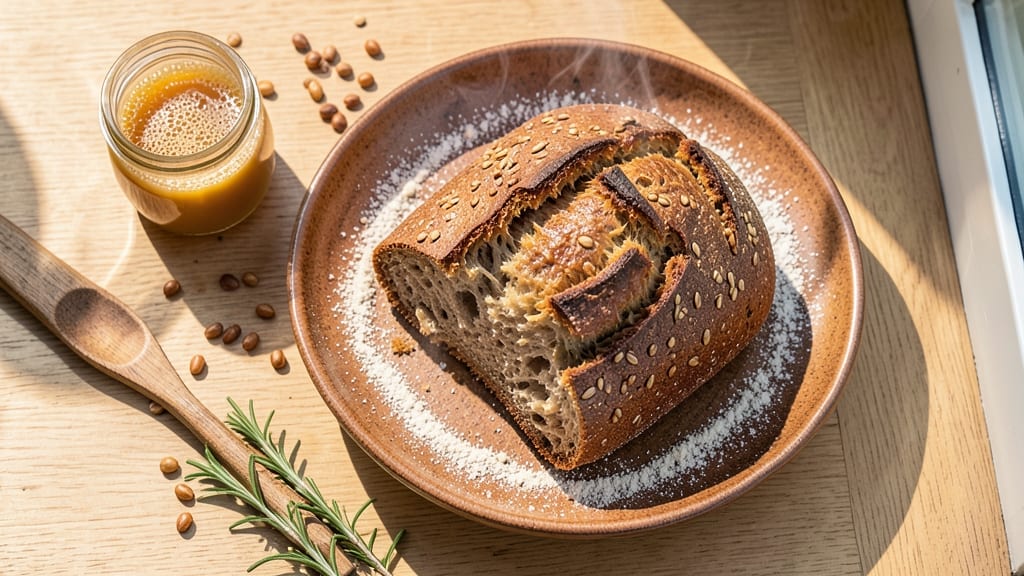
This 8 grain bread recipe delivers a symphony of textures and flavors—crisp golden crust, open crumb, and a nutty depth that comes from blending whole wheat, rye, barley, and five other grains. The secret lies in balancing hydration and fermentation, creating a loaf that’s both hearty and delicate.
I’ve perfected this over years of baking, and it’s become a staple in my kitchen for everything from toast to sandwiches.
The beauty of this recipe is in the grains: whole wheat adds structure, rye contributes earthy richness, and barley brings a subtle sweetness. Together, they create a bread with a satisfying chew and a crust that’s crisp enough to hold butter without crumbling.
The dough requires patience—kneading develops gluten for that open crumb, while proper proofing ensures a light, airy texture. It’s worth the time for a loaf that tastes like a bakery’s best.
Once baked, this bread stays fresh for days, but you’ll likely devour it faster. Toast it for breakfast with butter and jam, or use it to soak up soups and stews. The nutty flavor pairs perfectly with sharp cheeses, smoked meats, or even as a base for crostini.
For leftovers, freeze slices and revive them in the oven for crispy toast—no waste, all flavor.
This recipe is a game-changer for home bakers who want artisanal results without the complexity. With a few simple ingredients and a little time, you’ll have a loaf that rivals store-bought—and tastes far better. Let’s get started on your first batch.
Ingredients for 8 grain bread
Eight flours, one extraordinary loaf—crisp crust, open crumb, and nutty flavor that rivals bakery bread.
| Ingredient | Amount | Notes |
|---|---|---|
| Active Dry Yeast 🍞 | ¼ tsp | Or 1 packet instant yeast |
| Warm Water 💧 | 1 ¼ cups | 110°F for yeast activation |
| Whole Wheat Flour 🌾 | 1 ½ cups | Unbleached preferred |
| Rye Flour 🌾 | ¾ cup | Dark rye for best flavor |
| Barley Flour 🌾 | ½ cup | Ground from pearled barley |
| Spelt Flour 🌾 | ½ cup | Substitute white wheat if unavailable |
| Oat Flour 🌾 | ½ cup | Blended from rolled oats |
| Buckwheat Flour 🌾 | ¼ cup | Adds earthy depth |
| Cornmeal 🌽 | ¼ cup | For crust texture |
| Granulated Sugar 🍚 | 1 tbsp | Feeds yeast |
| Salt 🧂 | 1 ½ tsp | Diamond Crystal preferred |
| Olive Oil 🫒 | ¼ cup | Extra-virgin for richness |
| Honey 🍯 | 1 tbsp | Or maple syrup |
| Cold Water 💧 | ¾ cup | For final dough hydration |
The flours are what make this bread special. King Arthur Flour is my go-to for whole wheat and rye—consistent quality matters here. For buckwheat and spelt, check the bulk bins at Whole Foods or Sprouts; they stay fresher longer. If you can't find spelt, swap it one-to-one with white whole wheat. The oat flour? Just blend rolled oats in a food processor until fine—no need to buy pre-made. For the crust, cornmeal is key; it creates that perfect crispy texture without overpowering the nutty flavors. And trust me, Diamond Crystal salt makes a difference in the final taste.
No rye flour? Substitute with pumpernickel cake crumbs—it works in a pinch. Running low on buckwheat? Swap with teff flour for similar earthiness. The honey can be maple syrup if you're avoiding it, but the flavor will be slightly different. For the olive oil, avocado oil works too—just use the same amount. If your flours are old (check the dates!), toast them lightly in a dry pan before mixing to revive their flavors. And if you're baking at high altitude, add an extra tablespoon of water to the dough—it helps with the extra evaporation.
This dough needs time—plan for at least 2 hours of rising, including the final proof. Store baked loaves wrapped in a clean kitchen towel at room temperature for 2-3 days, or freeze slices for up to 3 months. To revive frozen slices, warm them in a 350°F oven for 5-7 minutes until crispy. The crust stays fresh longer if you reheat it before serving—just a few minutes in the oven with a sprinkle of water in the pan. And if you make a double batch? It freezes beautifully for quick bread days later.
Why You'll Love This Recipe
- No-Fuss Mixing: I swear by this dough—just toss the flours (whole wheat, rye, barley) with warm water and yeast, then let the magic happen. No fancy kneading, no stress, just a simple stir and rise.
- Earthy Depth: That blend of whole wheat, rye, and barley? Rich, nutty, and just slightly chewy—like a hearty hug in bread form. Honestly, it’s the kind of flavor that makes store-bought loaves feel sad by comparison.
- Meal Prep MVP: Slice it, freeze it, toast it later. This bread keeps for days, reheats like a dream, and turns into perfect croutons or French toast. (Yes, even on a Tuesday night.)
- Budget Booster: Pantry staples only—flour, yeast, water—and it stretches to feed the whole family. I’ll be real: my grocery bill thanks me every time I make a batch.
Step-by-step instructions for 8 grain bread
This rustic loaf delivers a nutty crust and airy crumb with minimal effort—just follow these simple steps.
Activate the Yeast with Warm Water and Sugar
In a large mixing bowl, combine the 1.25 cups warm water (tested at 110°F—yeast should be lively in 5-10 minutes) with the 1 tbsp granulated sugar and 0.25 tsp active dry yeast. Stir gently and let sit for 10 minutes until frothy. You'll see bubbles forming—this means your yeast is alive and ready to work.
If no bubbles appear after 10 minutes, your yeast might be dead. Start fresh with a new packet. I always test my yeast this way to avoid flat bread later. Once bubbly, proceed to add the flours—this is where the magic begins.
Combine All Dry Ingredients and Mix to a Shaggy Dough
Add the 1.5 cups whole wheat flour, 0.75 cup rye flour, 0.5 cup barley flour, 0.5 cup spelt flour, 0.5 cup oat flour, 0.25 cup buckwheat flour, 0.25 cup cornmeal, 1.5 tsp salt, and 0.25 cup olive oil to the yeast mixture. Stir with a wooden spoon until a rough dough forms—it'll be sticky, but that's perfect.
This blend of flours gives the bread its signature nutty depth and open crumb. The buckwheat and rye add earthiness, while the spelt and oat flour keep it tender. Mix just until combined—overworking now will develop too much gluten and make the bread dense.
Knead by Hand for 8-10 Minutes Until Smooth
Turn the dough onto a lightly floured surface and knead for 8-10 minutes until smooth and elastic. I use my hands—press down, fold over, and push away repeatedly. The dough should spring back when poked and feel slightly tacky but not sticky.
Don't worry if it doesn't look like classic bread dough—this 8-grain mix is heartier. The cornmeal and oat flour add texture, so it won't be as silky as all-purpose bread. Once kneaded, place the dough back in the bowl, drizzle with 1 tbsp honey, cover with a damp towel, and let rise in a warm spot for 1-1.5 hours or until doubled.
Shape and Let Rest Before Final Rise
Punch down the risen dough and shape it into a 12-inch round loaf on a parchment-lined baking sheet. Fold the edges toward the center to create a tight seal. This shape helps the bread expand beautifully in the oven. Let it rest, covered, for 20 minutes—this final rest ensures an even rise.
While it rests, preheat your oven to 375°F. The dough should puff slightly during this time. If it doesn't, don't panic—just give it a few extra minutes. The goal is a loaf with an open crumb and crispy crust, not a dense brick.
Bake for 35-40 Minutes Until Golden and Hollow-Sounding
Bake the loaf for 35-40 minutes until the crust is deep golden brown and the internal temperature reaches 205°F. Tap the bottom—it should sound hollow. If the top browns too quickly, tent with foil after 20 minutes to prevent burning.
This bread thrives on its texture contrast: the nutty crust and airy crumb. Let it cool on a wire rack for at least 30 minutes before slicing—this prevents a gummy interior. Serve warm with butter or olive oil for the full experience.
Pro Tips For Making 8 Grain Bread
- Bloom the Yeast First: Skip mixing yeast straight into the dry grains—it’ll just sit there doing nothing. Instead, dissolve it in warm water (110°F) with a pinch of sugar for 5 minutes until frothy. This guarantees your rye and barley flours actually get activated, not left as dry passengers in your dough.
- Sift the Heavy Grains: Rye and barley flour are dense and packed with bran. Give them a quick sift before measuring to break up clumps and ensure even distribution in your dough. I learned this the hard way—lumpy dough means uneven texture, and nobody wants a bread with pockets of dryness.
- Don’t Over-Knead the Dough: With whole wheat, rye, and barley, the gluten gets tired fast. Knead just until the dough pulls away from the bowl (about 8–10 minutes by hand). Overwork it, and you’ll end up with a tough, chewy loaf instead of the light, airy crumb you’re after—especially with all those heavy grains.
- Steam the Oven First: Slide a metal bowl of boiling water onto the lower oven rack while preheating to 375°F. The steam mimics a bread oven’s humidity, helping your crust rise properly without cracking. I used to skip this, and my loaves would either burn too fast or stay dense—this fixes both problems.
Dietary considerations for 8 grain bread
Gluten-Free Adaptation
To make this 8 grain bread gluten-free, replace the traditional flours with a 1:1 gluten-free flour blend like King Arthur Measure for Measure or Bob's Red Mill 1-to-1. Use ½ cup xanthan gum to mimic gluten’s structure—this keeps the crumb open and prevents crumbling.
The buckwheat and rye flours must be swapped for certified gluten-free versions (like gluten-free rye flour or certified buckwheat). Reduce the cold water by ¼ cup—gluten-free doughs absorb less moisture. Proofing time may extend to 1.5-2 hours due to slower fermentation. 🌾
Low-Carb/Keto Options
For a low-carb version, replace all flours with almond flour and coconut flour (mix 1.5 cups almond flour with 0.5 cup coconut flour). Add 2 extra egg whites for binding and 1 tsp psyllium husk powder to improve texture.
Reduce the honey to 1 tsp and omit the cornmeal. This version will be denser but still delicious with avocado or cream cheese. Bake at 350°F for 40-45 minutes—it needs extra time to crisp. 🥑
Allergen-Friendly Swaps
For egg-free bread, replace the olive oil with ¼ cup melted coconut oil and add 1 tbsp ground flaxseed mixed with 3 tbsp water (let sit for 5 minutes to thicken). For dairy-free needs, skip the butter and use olive oil or nutritional yeast for a cheesy flavor.
If buckwheat is a concern, substitute with teff flour (1:1 ratio). Always check labels—some flours (like oat flour) may contain traces of gluten or nuts. 🌱
Nut-Free Version
To avoid nuts entirely, swap oat flour for white rice flour and cornmeal for tapioca starch (same quantity). Replace almond flour (if used in low-carb) with sunflower seed flour for a seed-based alternative. Check that all flours are nut-free certified—some brands process in facilities with nuts.
The texture will be slightly denser, but the nutty flavor comes from the rye and buckwheat, not the oats. 🌾
Soy-Free Considerations
Most flours in this recipe are naturally soy-free, but always verify labels—rye and barley can sometimes be cross-contaminated. If using soy-free yeast (like Red Star Soy-Free Yeast), ensure it’s labeled accordingly.
For extra safety, use certified organic flours—they’re less likely to have hidden soy traces. The bread’s flavor remains unchanged; soy-free yeast works identically to standard yeast. 🍞
Nutrition facts
Frequently asked questions
Why does this bread use so many different flours?
Each flour brings unique qualities: whole wheat adds structure, rye contributes earthy depth, and buckwheat provides a subtle nuttiness. The combination creates a complex flavor profile and satisfying texture that single-grain breads can't match. The mix also improves shelf life and nutritional value with added fiber and minerals.
Can I make this bread without a stand mixer?
This recipe is designed for hand-kneading. Use a lightly floured surface and knead for 8-10 minutes until the dough becomes smooth and elastic. The sticky texture is normal with multiple flours—just work it gently to avoid overdeveloping the gluten.
What's the best way to store leftover bread?
Wrap cooled loaves in a clean kitchen towel and store at room temperature for 2-3 days. For longer storage, slice and freeze—thaw in a 350°F oven for 5-7 minutes to revive crispiness. The crust stays fresh longer if reheated before serving.
Why did my bread turn out dense instead of light?
Dense bread usually means underproofing or over-kneading. Let the dough rise until it doubles in size (about 1-1.5 hours) and give it a 20-minute rest after shaping. Also check your yeast—it should be fresh and activated properly before mixing.
How can I tell when the bread is fully baked?
Look for a deep golden brown crust and tap the bottom—the sound should be hollow. The internal temperature should reach 205°F. If the top browns too quickly, tent with foil after 20 minutes to prevent burning while the center finishes baking.