
Side Dishes
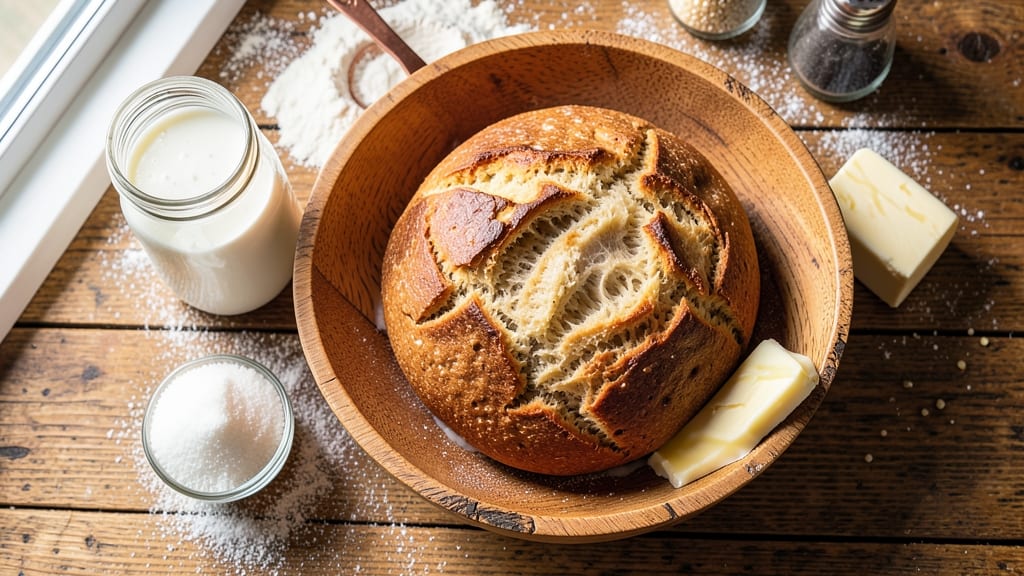
This American soda bread recipe delivers the rustic, tangy perfection that makes it a kitchen staple—no yeast, no fuss, just a tender crumb and golden crust. The secret lies in that buttermilk, which creates signature air pockets while keeping the bread moist and flavorful.
My version stays true to tradition while offering a lighter texture that's perfect for any table.
What sets this recipe apart is its simplicity: just five core ingredients come together with minimal effort. The baking soda reacts with the buttermilk to create that signature rise, while a touch of sugar balances the tang.
No kneading required—this dough comes together in minutes, making it ideal for busy weeknights or holiday gatherings.
By the time it emerges from the oven, you'll have a loaf with a crisp, caramelized crust and a tender interior that crumbles just enough to soak up soups or butter.
The tangy depth comes from properly rested dough, which develops flavor as it sits. This is the kind of bread that tastes even better the next day.
Serve it warm alongside stews, chowders, or even breakfast—it's equally at home on a farmhouse table or a modern counter. The recipe includes variations for savory additions like herbs or cheese, proving its versatility. Let's get baking!
Ingredients for american soda bread
Five simple ingredients transform into rustic, tangy soda bread with crisp crust and tender crumb.
| Ingredient | Amount | Notes |
|---|---|---|
| All-Purpose Flour 🌾 | 3 ½ cups | Unbleached preferred for lighter texture |
| Buttermilk 🥛 | 1 ½ cups | Full-fat for authentic tanginess |
| Baking Soda 🧂 | 1 tbsp | Freshly opened for maximum lift |
| Granulated Sugar 🍚 | ¼ cup | Light brown sugar for subtle caramel notes |
| Salt 🧂 | ½ tsp | Diamond Crystal preferred for purity |
| Unsalted Butter 🧈 | ½ cup | Cold and cubed for crisp crust |
| Milk 🥛 | ¼ cup | Warmed to blend smoothly |
| Fresh Rosemary 🌿 | 1 tbsp | Chopped finely for subtle aroma |
The flour is non-negotiable here—King Arthur or Bob's Red Mill are my go-tos for consistent rise. Buttermilk is the soul of this bread, so don't skimp. Whole Foods or local dairies often carry high-quality buttermilk with rich tang. If you must substitute, mix 1 cup milk with 1 tbsp lemon juice or vinegar, but let it sit 5 minutes first. The baking soda must be fresh—if it's been open for months, toss it and buy a new box. Diamond Crystal salt dissolves more easily than table salt, which prevents uneven flavor distribution.
No buttermilk? Plain yogurt at a 1:1 ratio works in a pinch, though the texture will be slightly denser. Want extra flavor? Add 1 tsp honey or maple syrup to the dough. The butter should be cold—if it's too soft, chill it 15 minutes before mixing. For a savory twist, swap the rosemary for 1 tsp dried thyme or 2 tbsp grated Parmesan. The sugar can be omitted entirely if you prefer a more rustic, less sweet loaf—just know it'll be slightly denser.
This dough keeps beautifully in the fridge for 2 days or frozen for 3 months. Shape it into a log, wrap tightly in plastic, and let it rest at room temp 30 minutes before baking. The bread reheats best in a 200°F oven for 10 minutes—wrapped in foil to keep it moist. Store leftovers in a bread bag at room temperature for 3 days or freeze slices for toast. The crust stays crisp for hours, but the interior softens quickly—eat it fresh when possible.
Why You'll Love This Recipe
- No-Mix Magic: I swear by this—just dump the flour, buttermilk, and baking soda into a bowl, stir once, and you’re done. That’s it. The baking soda does all the work, so no kneading, no waiting for dough to rise. My lazy Sunday mornings thank me every time.
- Tangy Twist: The buttermilk’s sour kick paired with that first bite’s crispy crust? It’s like a hug in bread form. Add a pinch of sugar, and suddenly you’ve got something sweet enough to eat straight from the oven—no butter needed.
- Leftovers That Shine: This bread stays fresh for days, and it’s perfect for sandwiches or toast. I’ll be real: I often bake two loaves because one disappears faster than I can say “buttermilk.” Freeze slices for quick breakfasts—no reheating required.
- Pocketbook Hero: Flour, buttermilk, baking soda—these are pantry staples that won’t break the bank. For less than $3, I feed my whole family dinner rolls, toast, or even a side for stew. Budget-friendly doesn’t mean boring, especially when it tastes this good.
Step-by-step instructions for American soda bread
This method delivers a tender crumb with a crisp crust and that signature tangy depth.
Combine Dry Ingredients for Even Distribution
In a large mixing bowl, whisk together the 3.5 cups all-purpose flour, 1 tbsp baking soda, 0.25 cup granulated sugar, and 0.5 tsp salt. I like to use a whisk for this step to ensure the baking soda distributes evenly throughout the flour—uneven distribution can lead to pockets of flat, dense bread.
Next, add the 1 tbsp finely chopped fresh rosemary and mix it in thoroughly. The rosemary should be finely minced so it infuses flavor without overpowering the bread. Set this dry mixture aside while you prepare the wet ingredients.
Cut in Cold Butter for Crisp Crust
In a separate bowl, combine the 1.5 cups buttermilk and 0.25 cup warmed milk. The warmth helps the milk blend smoothly with the buttermilk, preventing lumps later. Add the 0.5 cup cold, cubed unsalted butter to the dry ingredients and use a pastry cutter or your fingers to work it in until the mixture resembles coarse crumbs with pea-sized butter pieces.
This step is crucial for achieving that signature crisp crust. The cold butter creates pockets of steam during baking, which expand to create a tender crumb while the butter itself browns beautifully for that golden crust. Don't overwork the butter—just until it's evenly distributed.
Form the Dough and Shape the Loaf
Gradually add the buttermilk mixture to the dry ingredients, mixing just until combined. The dough will be sticky but shouldn't require excessive handling. I find it helpful to use a rubber spatula to scrape down the sides of the bowl and fold the dough a few times to ensure everything blends evenly.
Transfer the dough to a lightly floured surface and gently shape it into a round loaf. The dough should be about 3 inches thick at its center. Place the loaf on a parchment-lined baking sheet and cover it loosely with plastic wrap. Let it rest at room temperature for 30 minutes—this allows the gluten to relax slightly, making it easier to handle and preventing cracking during baking.
Bake Until Golden Brown and Hollow-Sounding
Preheat your oven to 375°F and place a small baking dish filled with water on the lower rack. This creates steam during the initial baking phase, which helps develop that crisp crust and tender crumb. Once preheated, bake the bread for 45-50 minutes until it's deep golden brown and sounds hollow when tapped on the bottom.
I recommend checking the bread at the 40-minute mark—it should be fully risen and beginning to brown. If the top browns too quickly, tent it loosely with foil to prevent over-browning while it continues to bake through. The internal temperature should reach 190-200°F when fully done.
Cool and Serve for Maximum Flavor Development
Remove the bread from the oven and transfer it to a wire rack to cool completely. This step is important—slicing the bread too soon can result in a gummy texture. While cooling, the bread will firm up and develop its full flavor. I like to brush the warm bread with a little melted butter if I'm serving it immediately.
For the best texture, serve the bread at room temperature. Each slice should have a crisp exterior with a tender, slightly tangy crumb. The rosemary will add a subtle herbal note that pairs beautifully with butter, jam, or soups. Store any leftovers in an airtight container for up to 3 days or freeze for longer storage.
Pro Tips For Making American Soda Bread
- MEASURE BUTTERMILK PRECISELY: Soda bread is picky about liquid—too little and it’s dense, too much and it collapses. Use a liquid measuring cup for the buttermilk (about 1 ¼ cups for a standard recipe) and tap it gently to settle the foam before pouring. I learned this the hard way when a batch turned out like a brick because I eyeballed it.
- STOP WHEN IT’S DONE: The bread’s ready when it sounds hollow when tapped on the bottom and the crust is deep golden, not brown. Overbaking dries it out—trust the timer (20-25 minutes) but check with a thermometer if you’re unsure. (Yes, even if you’re impatient like me.)
- DON’T SKIP THE REST: After mixing, let the dough sit covered for 10 minutes. This relaxes the gluten, so it rises evenly instead of cracking or doming. I was skeptical until I tried it—now it’s non-negotiable.
- USE COLD BUTTERMILK: Straight from the fridge, buttermilk reacts better with the baking soda for a proper rise. If yours is warm, chill it for 10 minutes first. Sounds weird, but it works—your bread will be lighter, not gummy.
Regional styles of american soda bread
Irish Farmhouse Roots
This soda bread traces back to Ireland's potato famine era, where families relied on simple ingredients like flour, buttermilk, and baking soda. The traditional version often included potatoes mashed into the dough for extra moisture—a nod to Ireland's staple crop.
My version keeps the classic tang but swaps potatoes for butter, creating a lighter texture that's perfect for modern kitchens. The rosemary adds a touch of sophistication while staying true to rustic roots. 🌾
New England Twist
Up north, soda bread often gets a heartier treatment with additions like sharp cheddar cheese or crispy bacon bits mixed into the dough.
I like adding ½ cup shredded cheddar and ¼ cup cooked bacon crumbles to the dry ingredients for a savory loaf that pairs perfectly with New England clam chowder. The cheese melts slightly during baking, creating pockets of gooey goodness. 🧀
Southern Buttermilk Bread
The American South embraced soda bread as a staple for its ability to feed large families with minimal effort. Here, it often becomes a breakfast bread, served warm with honey or jam.
For a Southern-style version, I add 1 tsp cinnamon and ½ tsp nutmeg to the dry ingredients, then top the baked loaf with a simple glaze of ½ cup melted butter mixed with 2 tbsp honey. The warmth of the spices complements the tangy buttermilk beautifully. 🍯
Herb-Infused Variations
Herbs elevate soda bread from simple to extraordinary. In coastal regions, fresh dill or thyme are common, while garden varieties often feature parsley or basil. I love a mix of 1 tbsp each of fresh rosemary, thyme, and parsley for a fragrant loaf.
For a Mediterranean twist, swap the rosemary for 1 tsp dried oregano and add ½ tsp garlic powder to the dry ingredients. 🌿
Sweet Potato Adaptation
For a nutritious twist, replace ½ cup of the flour with mashed sweet potato—this adds natural sweetness and moisture. The result is a slightly denser but incredibly flavorful loaf that's perfect for holiday tables.
I recommend using 1 cup cooked and mashed sweet potato (about 1 medium potato) and adding 1 tsp cinnamon to enhance the sweetness. This version pairs wonderfully with spiced apples or pecan butter. 🍠
Modern Minimalist
For those who prefer simplicity, strip it back to the essentials: flour, buttermilk, baking soda, and salt**. Skip the sugar and herbs entirely for a clean, tangy loaf that lets the buttermilk's natural flavor shine.
This version is ideal for pairing with rich soups or as a side for grilled meats. The beauty of soda bread lies in its adaptability—whether you keep it traditional or modern, the result is always comforting. ✨
Nutrition facts
Frequently asked questions
Why does my American soda bread turn out dense instead of light and airy?
Dense soda bread usually means the baking soda wasn't fresh or wasn't distributed evenly. Always use freshly opened baking soda (it loses potency over time) and whisk it thoroughly with the flour. Also, avoid overmixing the dough—just combine until barely combined to prevent developing too much gluten. The dough should be sticky but not require heavy kneading.
Can I make American soda bread without buttermilk?
Yes! The best substitute is 1 cup plain yogurt or 1 cup milk + 1 tbsp lemon juice/vinegar (let it sit 5 minutes). For richer flavor, use sour cream instead of yogurt. The tang is essential for that signature taste, so don't skip the acid component entirely. The texture will be slightly denser but still delicious.
How do I store leftover American soda bread?
At room temperature, wrap it in a clean kitchen towel or paper bag for 2-3 days—this keeps it moist longer than plastic. For longer storage, freeze slices wrapped in plastic wrap for up to 3 months. To reheat, warm at 300°F for 5-10 minutes wrapped in foil to restore that crisp crust.
What's the best way to shape the dough for perfect rise?
Gently form the dough into a 3-inch-thick round (about 8 inches wide) on a floured surface. Don't press too hard—just shape it loosely. Place it on a parchment-lined baking sheet and let it rest 30 minutes covered with plastic wrap. This helps the bread rise evenly and prevents cracking. For a rustic look, make a shallow cross on top with a sharp knife before baking.
Can I add other ingredients like cheese or nuts to this recipe?
For savory versions, try ½ cup shredded cheddar or ¼ cup chopped walnuts. Fold them into the dough after mixing wet and dry ingredients. Sweet variations work well with ½ cup raisins or chopped dried fruit. Just be gentle when mixing to avoid deflating the dough—add-ins should be evenly distributed but not overworked.