
Side Dishes
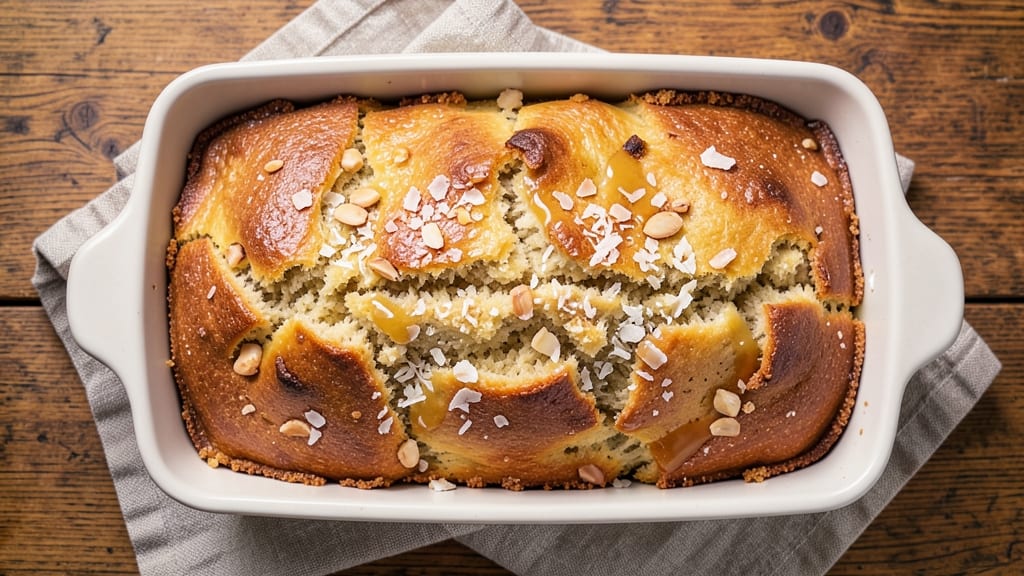
This almond coconut bread recipe delivers a perfect balance of nutty richness and tropical sweetness, crowned with a golden, crispy top that makes every slice irresistible. The secret lies in the swirl of almond flour and coconut milk, which creates a tender crumb while maintaining that satisfying crunch. I developed this recipe after years of baking, refining it to ensure a foolproof method that works every time—no guesswork, just delicious results.
The beauty of this bread is its versatility—it works as a standalone side dish, a breakfast companion, or even a dessert when dusted with powdered sugar. The almond flour adds depth, while the coconut milk keeps the texture moist and fluffy.
Baking at 350°F for about 45 minutes ensures a crispy crown without drying out the interior, and the swirl technique guarantees those beautiful, nutty pockets throughout.
What you’ll end up with is a loaf that’s golden on the outside, tender on the inside, and packed with the perfect harmony of almond and coconut flavors. The aroma alone will have everyone gathering around the kitchen, and the first bite delivers that satisfying mix of crunch and softness.
This recipe is designed to impress, whether you’re serving it at a holiday table or enjoying a quiet afternoon treat.
For extra indulgence, top with toasted coconut flakes or sliced almonds before baking—it’s a small touch that adds texture and visual appeal. The bread keeps well at room temperature for a few days, making it perfect for meal prep or gifting.
Let’s get started on a loaf that’s sure to become a household favorite.
Ingredients for almond coconut bread
These 15 ingredients create a golden, nutty-sweet loaf with crispy crown and tender crumb.
| Ingredient | Amount | Notes |
|---|---|---|
| All-Purpose Flour 🌾 | 1 ½ cups | For tender crumb structure |
| Almond Flour 🥜 | 1 ½ cups | Blanched preferred for mild flavor |
| Granulated Sugar 🍚 | ¾ cup | White or light brown |
| Coconut Sugar 🥥 | ¼ cup | For caramel notes |
| Coconut Milk (Full-Fat, Canned) 🥥 | 1 can | Well-shaken, no substitutes |
| Unsweetened Applesauce 🍎 | ½ cup | For moisture without oil |
| Ground Flaxseed 🌾 | 1 tbsp | Plus 3 tbsp water for flax egg |
| Baking Powder 🍳 | 2 tsp | Aluminum-free preferred |
| Baking Soda 🍳 | ½ tsp | For crispy crown |
| Salt 🧂 | ½ tsp | Fine sea salt |
| Vanilla Extract 🌿 | 1 tsp | Pure, high-quality |
| Toasted Coconut Flakes 🥥 | ½ cup | For swirl and topping |
| Sliced Almonds 🥜 | ¼ cup | Toasted for crunch |
| Powdered Sugar 🍚 | 2 tbsp | For dusting finished loaf |
| Plant-Based Butter (Vegan) 🧈 | ½ cup | Melted, full-fat preferred |
The almond flour and coconut milk are non-negotiable here—they create that signature nutty-tropical harmony. Bob's Red Mill almond flour is my go-to (it's finely ground and consistent), but any blanched almond flour works. For coconut milk, Thai Kitchen cans are the gold standard—full-fat and creamy, not watery. Toast your own coconut flakes in a dry pan for 3-4 minutes until golden, or grab pre-toasted from Trader Joe's. The flax egg (1 tbsp ground flaxseed + 3 tbsp water) replaces eggs perfectly—let it sit for 5 minutes to thicken. And trust me, Miyoko's butter melts beautifully without any weird aftertaste.
No almond flour? Substitute with extra all-purpose flour, but the texture will be denser. Coconut milk too expensive? Full-fat coconut cream works in a pinch, but it's thicker so thin it with water. Short on sliced almonds? Toasted pecans or walnuts add a different but lovely crunch. The powdered sugar topping is optional, but it's that final touch that makes the bread feel extra special—like you put in the effort. And if you're worried about the bread being too sweet, the almond flour's natural nuttiness balances everything beautifully. Pro tip: Use a kitchen scale for accurate measurements—especially with the flours.
This loaf keeps at room temperature for 3-4 days wrapped in a clean kitchen towel (the towel helps maintain moisture). For longer storage, slice and freeze portions for up to 3 months. To reheat, wrap slices in foil and warm in a 350°F oven for 5-7 minutes—the crispy crown comes back to life. I always make two loaves—one for the table, one to gift-wrapped in parchment with a ribbon. The aroma alone makes it irresistible. And if you're feeling fancy, brush the warm loaf with a little coconut oil before dusting with powdered sugar—it adds a subtle sheen.
Why You'll Love This Recipe
- No Mixer Needed: I swear by this recipe when my stand mixer’s broken (again). Just whisk the coconut milk into the wet ingredients—no electric help required—and let the almond flour do the heavy lifting. The dough comes together smoother than I expected, even with the combo of almond and all-purpose flour.
- Tropical Twist Daily: That first bite? Like biting into a vacation. The coconut milk adds this rich, creamy depth, while the coconut sugar gives it just enough caramelized warmth to make it feel special—without tasting like a dessert. Honestly, I reach for this instead of plain white bread now.
- Weeknight & Weekend: Make a loaf on Sunday, and you’ve got toast for breakfast, sandwiches for lunch, and French toast for dinner. The texture holds up beautifully when toasted, and the almond flour keeps it from getting gummy. (Yes, even on a Tuesday night.)
- Budget-Friendly Luxury: Almond flour can be pricey, but this recipe stretches it—just a cup does the trick alongside regular flour. Coconut milk’s cheap in cans, and the sugars caramelize into something far more indulgent than their cost suggests. My wallet and taste buds both win.
Step-by-step instructions for almond coconut bread
Here's how to create a golden, nutty-sweet loaf with that perfect crispy crown you crave.
Create the Flax Egg and Prepare Wet Ingredients
In a small bowl, whisk together the 1 tablespoon ground flaxseed with 3 tablespoons water. Let it sit for 5 minutes until it thickens into a gel-like consistency—this is your flax egg, the perfect egg substitute. Meanwhile, in a large mixing bowl, combine the 0.5 cup unsweetened applesauce, 0.5 cup plant-based butter (vegan) (melted), 0.75 cup granulated sugar, 0.25 cup coconut sugar, and 1 teaspoon vanilla extract. Mix until smooth and creamy.
This step is crucial for binding the loaf without eggs. The applesauce keeps things moist while the sugars dissolve completely for even distribution. I like to warm the butter slightly first to help it blend more easily with the applesauce—just enough to soften, not melt completely.
Combine Dry Ingredients and Form the Dough
In a separate bowl, whisk together the 1.5 cups all-purpose flour, 1.5 cups almond flour, 2 teaspoons baking powder, 0.5 teaspoon baking soda, and 0.5 teaspoon salt. Gradually add this dry mixture to your wet ingredients while mixing on low speed until just combined—you should still see some flour streaks. This prevents overmixing which can make the bread dense.
Now fold in the 0.5 cup toasted coconut flakes and 0.25 cup sliced almonds using a spatula. The dough will be thick and sticky, almost like cookie dough. Don't worry if it looks messy—this is exactly what we want for that moist, nutty texture. For the swirl effect, divide the dough in half and set one portion aside.
Create the Swirl and Bake for Crispy Perfection
Lightly grease a 9x5-inch loaf pan and line the bottom with parchment paper for easy removal. Spread half of the dough evenly into the pan, then add all of the reserved dough on top. Use a butter knife to gently swirl the two layers together in a marbled pattern—this creates those beautiful nutty-sweet swirls throughout.
Bake in a preheated 350°F oven for 50-55 minutes, or until a toothpick inserted in the center comes out clean and the top is deep golden brown. Here's the secret to that crispy crown: after 40 minutes, tent the loaf with aluminum foil to prevent over-browning while it finishes cooking through. The edges should be set but still slightly soft to the touch.
Cool and Finish with Powdered Sugar
Remove the loaf from the oven and let it cool in the pan for 10 minutes, then transfer to a wire rack. While still warm, dust the top generously with 2 tablespoons powdered sugar using a fine-mesh sieve. This creates that signature dusting that makes everything look so professional.
For best results, let the bread cool completely before slicing—this ensures clean cuts and prevents crumbling. The interior should be moist with pockets of coconut and almond throughout, while the exterior remains crispy. Each slice reveals those beautiful nutty swirls that make this bread so special.
Pro Tips For Making Almond Coconut Bread
- WHISK COCONUT MILK FIRST: I learned this the hard way—shaking the canned coconut milk before opening saves you from clumping later. The solids sink, so give it a good 10-second shake before measuring, or your batter will turn out lumpy and uneven.
- WEIGH YOUR FLOURS: Almond flour and all-purpose flour behave completely differently when scooped. Use a kitchen scale for both—almond flour packs tightly, while all-purpose loosens. I skip measuring cups entirely; the ratio matters more than you’d think.
- BAKE UNTIL 205°F: This bread’s done when the internal temp hits 205°F (not the 190°F you’d check for regular bread). The almond flour keeps it moist longer, so pull it too soon and it’ll stay dense. A toothpick test? Fine, but trust the thermometer—it’s foolproof.
- SWAP COCONUT SUGAR LAST: Add the coconut sugar after mixing wet and dry ingredients—it’s hygroscopic and absorbs moisture fast. If you mix it in early, your batter will thicken weirdly, and the bread might turn out gummy. Toss it in at the end, then fold gently.
Essential equipment for perfect results
Mixing Essentials
Start with a stand mixer or hand mixer for the wet ingredients—I use my KitchenAid Artisan Series for its consistent speed control. The large mixing bowl should be at least 5-quart capacity to handle the thick dough comfortably.
For measuring, a kitchen scale is ideal for the flours, but if you prefer cups, use spoon-and-level technique for accuracy. A small whisk helps dissolve the sugars completely in the wet mixture. 🌿
Dough Tools
A spatula (preferably silicone) is perfect for folding in the toasted coconut flakes and sliced almonds—it cuts through the sticky dough without tearing. For the swirl technique, grab a butter knife or offset spatula to create clean, even patterns.
I keep a small bowl nearby to hold any extra nuts or coconut that might stick to the tools. A bench scraper helps if you need to clean up edges during mixing.
Baking Setup
Your 9x5-inch loaf pan needs to be lightly greased with coconut oil or vegan butter—avoid butter substitutes that might burn. Line the bottom with parchment paper for easy removal (I use Reynolds Non-Stick Parchment).
For the crispy crown, have aluminum foil ready to tent the loaf after 40 minutes. A toothpick is essential for checking doneness—insert it near the center and wait 5 seconds before pulling out.
Cooling Station
After baking, transfer the loaf to a wire rack to cool completely. I use a cooling rack with feet to allow air circulation on all sides. For the powdered sugar finish, a fine-mesh sieve (like OXO Good Grips) ensures an even dusting without clumps.
Keep a clean kitchen towel handy to wrap the cooled loaf for storage—it helps maintain moisture for days. 💫
Optional Extras
For extra flair, toast your sliced almonds and coconut flakes in a small skillet over medium-low heat until golden (about 3-4 minutes). A pastry brush comes in handy if you want to brush the warm loaf with melted coconut oil before dusting.
For gifting, grab parchment paper and kitchen twine to wrap the cooled loaf beautifully. These small touches elevate the presentation without extra effort.
Nutrition facts
Frequently asked questions
Can I make this almond coconut bread without almond flour?
Yes, but the texture and flavor will change. Replace the 1.5 cups almond flour with 1.5 cups all-purpose flour plus 0.25 cup ground almonds for some nutty flavor. The bread will be slightly denser but still delicious. For extra moisture, add 1 tablespoon coconut milk to the wet ingredients. The swirl effect will still work, though the nutty depth will be less pronounced.
Why does my almond coconut bread turn out dry?
Dry bread usually means overbaking or insufficient moisture. First, check your baking time—remove it when a toothpick comes out clean (50-55 minutes max). For extra moisture, ensure you're using full-fat coconut milk (not light) and don't skip the applesauce. If your kitchen is dry, tent the loaf with foil after 40 minutes to trap steam. Also, let the bread cool completely before slicing—cutting too soon releases moisture.
How can I make this bread gluten-free?
Swap the 1.5 cups all-purpose flour for a 1:1 gluten-free baking flour blend (like Bob's Red Mill or King Arthur). Use 1.5 cups total of the blend, plus 0.5 teaspoon xanthan gum if your blend doesn't include it. For binding, add 1 extra tablespoon ground flaxseed to the wet ingredients. The texture will be slightly denser but still moist. Bake for 55-60 minutes—gluten-free bread needs a little more time to set.
Can I add chocolate chips or other mix-ins?
Fold in 0.5 cup vegan chocolate chips or 0.25 cup chopped dried fruit (like cranberries or raisins) with the toasted coconut flakes. For a tropical twist, try 0.25 cup shredded dried pineapple (pat it dry first). Keep mix-ins to 0.5 cup total to maintain the bread's structure. If using chocolate, reduce the sugar slightly (0.5 cup granulated sugar) since chocolate is sweet.
What's the best way to reheat sliced almond coconut bread?
For that crispy crown, wrap slices in foil and warm in a 350°F oven for 5-7 minutes. For a quicker option, toast in a toaster oven at 375°F for 3-4 minutes—this revives the crunch without drying out the interior. Avoid microwaving, as it makes the bread gummy. If storing in the freezer, toast directly from frozen (add 1-2 extra minutes to the oven time).